

St Giles' Church, Wrexham
St Giles' Church, Church Street, Wrexham LL13 8LS


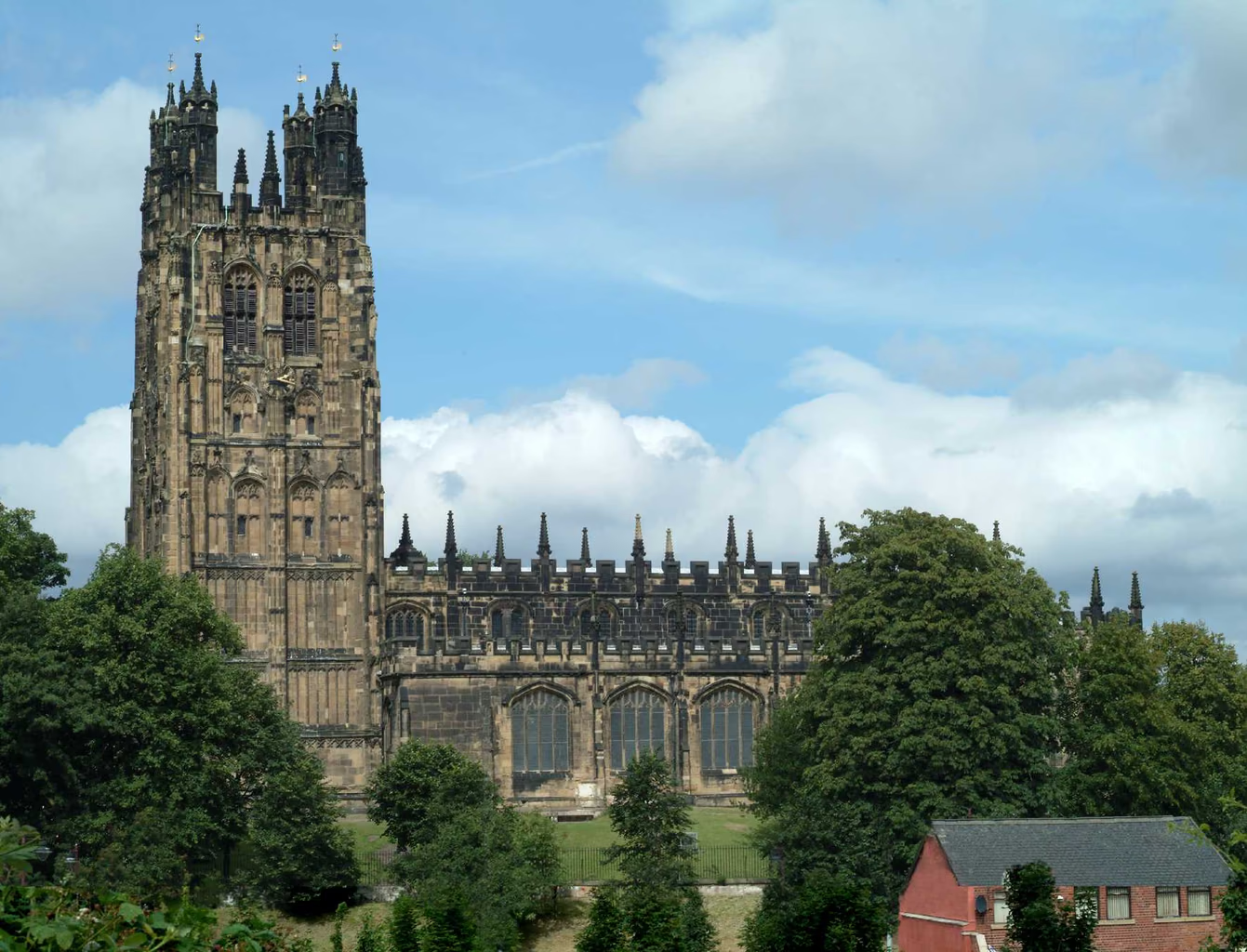

Starting point of the Holywell Way, and the "glory of the Marches"
Highlights
- Perpendicular tower of 1506–25, the ‘Wrexham steeple’ of the Seven Wonders of Wales
- A medieval Doom painting over the chancel arch and an angel roof of carved musicians
- Tomb of Elihu Yale, benefactor of Yale University, beyond the Davies brothers’ ironwork gates
For as long as there has been a town at Wrexham there has been a church at its heart. The first firm record is 1220, when the Bishop of St Asaph assigned part of the church’s income to the monks of Valle Crucis Abbey. Tradition reaches back further still, to an eleventh-century foundation dedicated to the Celtic saint Silyn, before the church took the name of Giles — Aegidius — the seventh-century hermit of Provence who lived in the wilderness on the milk of a hind, and who became the patron of the poor, the lame and the leprous. Churches were given to him at places of healing and refuge.
The building is the product of two disasters. A storm brought down the tower of the earlier church in 1330, and a century later fire ravaged what was left. What rose from that, rebuilt through the late fifteenth and early sixteenth centuries, is one of the finest medieval parish churches in Wales — British Pilgrimage Trust's own patron Sir Simon Jenkins called it ‘the glory of the Marches’, and Samuel Johnson, passing through in the eighteenth century, thought it ‘a very large and magnificent church’. Turner stopped to sketch it. It is listed Grade I and currently under careful conservation.
St Giles Wrexham's Tower
The tower was completed between 1506 and 1525, 41 metres high, crowded with statues, pinnacles and carvings. Tudor roses and royal emblems worked into the stone point to the possible patronage of Lady Margaret Beaufort, mother of Henry VII. It is the ‘Wrexham steeple’ of the old rhyme: Pistyll Rhaeadr and Wrexham steeple, Snowdon’s mountain without its people, Overton yew trees, St Winefride’s wells, Llangollen bridge and Gresford bells. Worth noticing before you set off: two of the Seven Wonders of Wales stand at either end of the Holywell Way, this tower at the start and St Winefride’s Well at the finish, 25 miles and two or three days apart along the Wat’s Dyke Way.
St Giles Wrexham Interior Craftsmanship
Inside, the craftsmanship of that age survives: an angel roof of carved figures playing instruments, a rare medieval brass eagle lectern among the oldest in Britain, and a Doom painting over the chancel arch. Look too for the monument to Mary Myddelton, carved by Louis-François Roubiliac in the 1750s and among his finest work anywhere.
Several of the windows are by C. E. Kempe and his successors, and their subjects run to the healing of the lame beggar at the Beautiful Gate, Christ healing the sick, the pool of Bethesda, the boy born deaf and dumb — a whole programme of healing miracles, in a church named for the patron of the sick and the lame. On the north wall of the north aisle is a Morris & Co. window of 1910, Characters from the Bible, designed by Edward Burne-Jones.
Beyond the churchyard gates, wrought by the Davies brothers of Bersham in 1719, lies the tomb of Elihu Yale. Born in Wrexham in 1649, he made his fortune with the East India Company and gave the money that renamed a Connecticut college after him; he was buried here in 1721. Yale University built its Wrexham Tower at Saybrook College in the likeness of this one, and members of the university restored the tomb in 1968. A steady trickle of American visitors still comes to find it, which is its own small pilgrimage.
The church has known hardship as well as splendour. Civil War soldiers destroyed an organ once described as ‘ye fayrest organes in Europe’. A 1611 King James Bible turned up in storage in modern times.
Directions
St Giles’ Church, Church Street, Wrexham LL13 8LS
GPS: 53.0448N 2.9931W
In the centre of Wrexham, a few minutes’ walk from the bus and rail stations. Generally open to visitors during the day, Monday to Saturday, roughly 10am–4pm; entry free, donations welcome. Sunday services 8am, 9.30am and 11am, Thursday 11am. Level access to the main areas, accessible toilets nearby, bike storage, dog friendly. Check the church website before travelling, as conservation work is ongoing.
Amenities
Key facts
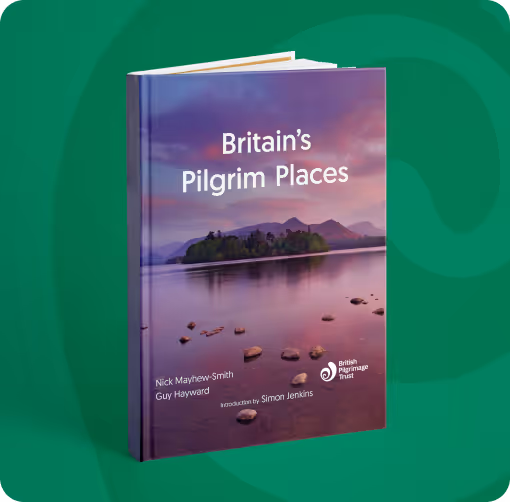
Britain’s Pilgrim Places
This listing is an extract from Britain’s Pilgrim Places, written by Nick Mayhew-Smith and Guy Hayward and featuring hundreds of similar spiritually charged sites and landscapes from across Britain.
Proceeds from sale of the book directly support the British Pilgrimage Trust, a non-profit UK charity. Thank you.


Location
Nearby routes




Comments
0 Comments
Login or register to join the conversation.
Tom Jones
Lorem ipsum dolor sit amet, consectetur adipiscing elit. Suspendisse varius enim in eros elementum tristique. Duis cursus, mi quis viverra ornare, eros dolor interdum nulla, ut commodo diam libero vitae erat. Aenean faucibus nibh et justo cursus id rutrum lorem imperdiet. Nunc ut sem vitae risus tristique posuere.