.svg)

Brue River Pilgrimage, Bruton to Glastonbury Tor
Southwest England
.svg)


.svg)
Brue Pilgrimage: Source to Glastonbury, 2-3 days, 24 miles
Walk with the Brue, from its source on the National Trust’s Stourhead Estate, downriver to the historic Abbey town of Glastonbury.
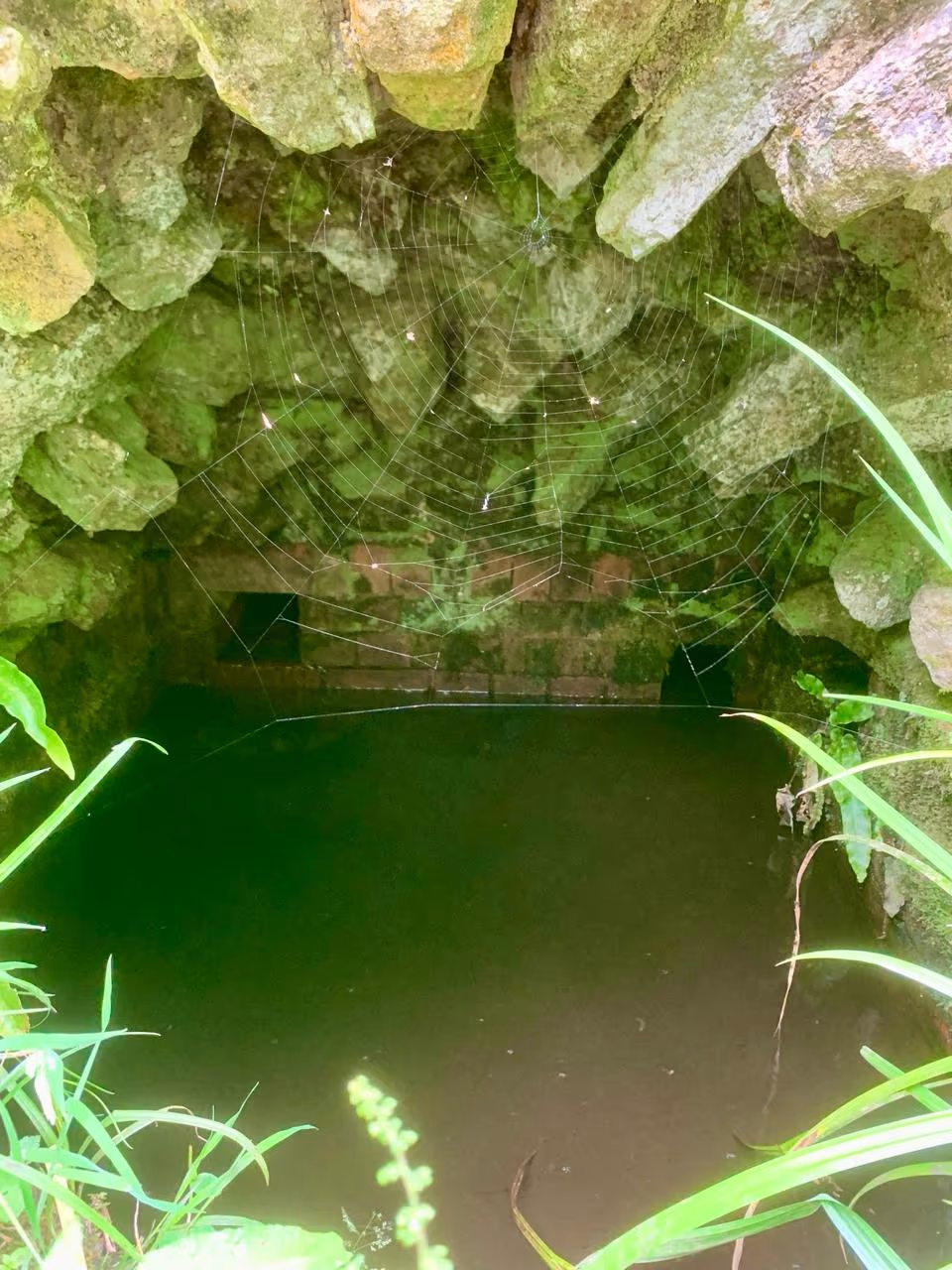
Bridget’s river, Brue, historically Bryw in Brythonic, or “brisk”, springs from the rim of the bowl surrounding the parish of Brewham; from where she falls 150 metres in six miles to Bruton, the Saxon town bearing her name.
We begin in King’s Wood Warren, where Henry Hoare II built King Alfred’s Tower, celebrating him mustering his men of Somerset, Wiltshire and Dorset at his grandfather Edgar’s stone, (marking the three-counties point), two nights before defeating the Danes at Eðandun.
In 1917, Bruton suffered the heaviest 24-hour rainfall in British history, until Boscastle in Cornwall took that wet crown in 2004. A plaque on Patwell Street marks the height Brue waters reached, at the upstairs windows of houses looking back downhill. When a flood storage reservoir was built in 1984 to protect the town, a sword of Alfred’s era was found beside the Brue. A replica rests in Bruton Museum.
Bruton, also a former abbey town, boasts a Saxon street-plan, once hosting 22 coaching inns. Today, an internationally-renowned contemporary art gallery, Hauser & Wirth Somerset, plus much good food and accommodation, attracts visitors.
Downriver, the Brue flows more gently, past historic mills, then Castle Cary railway station, a good staging-point. Over halfway, we cross mediaeval multi-span Bolter’s Bridge, then the Brittonic-Roman Fosse Way, into West Lydford, where a large weir beside St Peter’s Church has become a popular wild-swimming spot. Scenic, but blocking passage to wild brown trout.
Beneath Lydford, we enter the drained waterscape of the Avalon Marshes, across which St Michael’s Church upon the Tor guides us towards Glastonbury. Its ruined Abbey, reputed home to the graves of King Arthur and his wife Guinevere, was where Saint Dunstan was called to become Archbishop of Canterbury in 959.
From Glastonbury, the Brue flowed past Brides Mound, through the Godney gap, and on reach the sea beneath Brean Down, until it was accidentally disconnected by later monks, digging a canal to reach their fish lakes at Meare. This historic course will form the sent half of the Brue Pilgrimage.
Route highlights
.svg)

_.avif)

_.avif)
Location

Nearby Places

.avif)
.svg)
Discover holy places, and bring your own beliefs.
Pilgrimage by foot is connected with places and landscape, and how those places make you feel. Read about holy places.
At the British Pilgrimage Trust, we believe a pilgrimage should be made on an individual’s own terms. We are founded on the principle that we can all bring our own beliefs to the journey, accessible and welcoming to all.


.svg)
Comments
0 Comments
Login or register to join the conversation.
Tom Jones
Lorem ipsum dolor sit amet, consectetur adipiscing elit. Suspendisse varius enim in eros elementum tristique. Duis cursus, mi quis viverra ornare, eros dolor interdum nulla, ut commodo diam libero vitae erat. Aenean faucibus nibh et justo cursus id rutrum lorem imperdiet. Nunc ut sem vitae risus tristique posuere.
Tom Jones
Lorem ipsum dolor sit amet, consectetur adipiscing elit. Suspendisse varius enim in eros elementum tristique. Duis cursus, mi quis viverra ornare, eros dolor interdum nulla, ut commodo diam libero vitae erat. Aenean faucibus nibh et justo cursus id rutrum lorem imperdiet. Nunc ut sem vitae risus tristique posuere.