

Oxford Four Gates Pilgrimage to the Centre
Southwest England


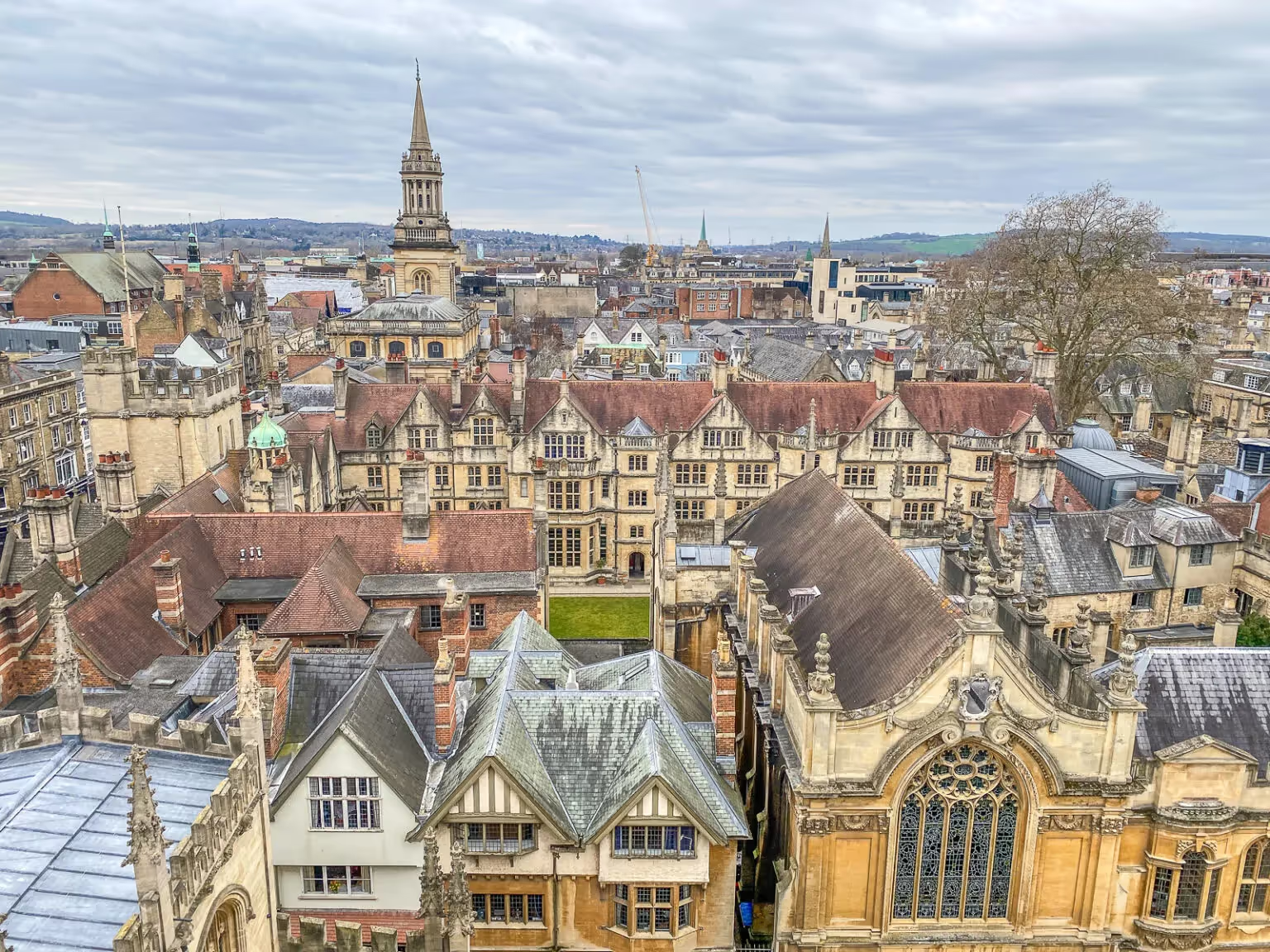


Oxford Four Gates Pilgrimage to the Centre – 5 miles, 1 day
A foundational myth of Oxford concerns King Lludd’s plight to end his second ‘plague’ of the May-Eve dragon shriek that paralysed the British people every year. A red dragon was embroiled in flying combat with a foreign white dragon – Lludd had to dig a hole for them at the exact centre of the island of Britain called Oxford, leave a cauldron of mead at the bottom of the hole, wait for them to fall into it after tiring of battle, drink the mead, to be then turned into pigs and fall asleep, then he had to wrap the pigs in satin and eventually bury them underground in a stone chest at the strongest place in the island, Dinas Emrys in Wales.
The dragon energy of Oxford is strong – St George has prominence in various places in the city and so does St Margaret, both associated with dragons. If one interprets dragons as the greening life force of nature, the imaginal space, it is no wonder that Oxford has generated the fantasies of JRR Tolkien, CS Lewis, Lewis Carroll, Diana Wynne Jones and, more recently Philip Pullman, Susanna Clarke and even JK Rowling.
St Frideswide
Oxford was built around a cross-road pattern (typical Etruscan city design), and its old city plan resembles that of a cathedral. At Oxford’s centre is Carfax Tower (‘carfax’ is Latin for crossroads), but its spiritual centre is Oxfordshire’s patron saint St Frideswide’s shrine in Christ Church Cathedral, who is associated with St Margaret and symbolised by a sprig of rosemary, continuing the connection to the green force.
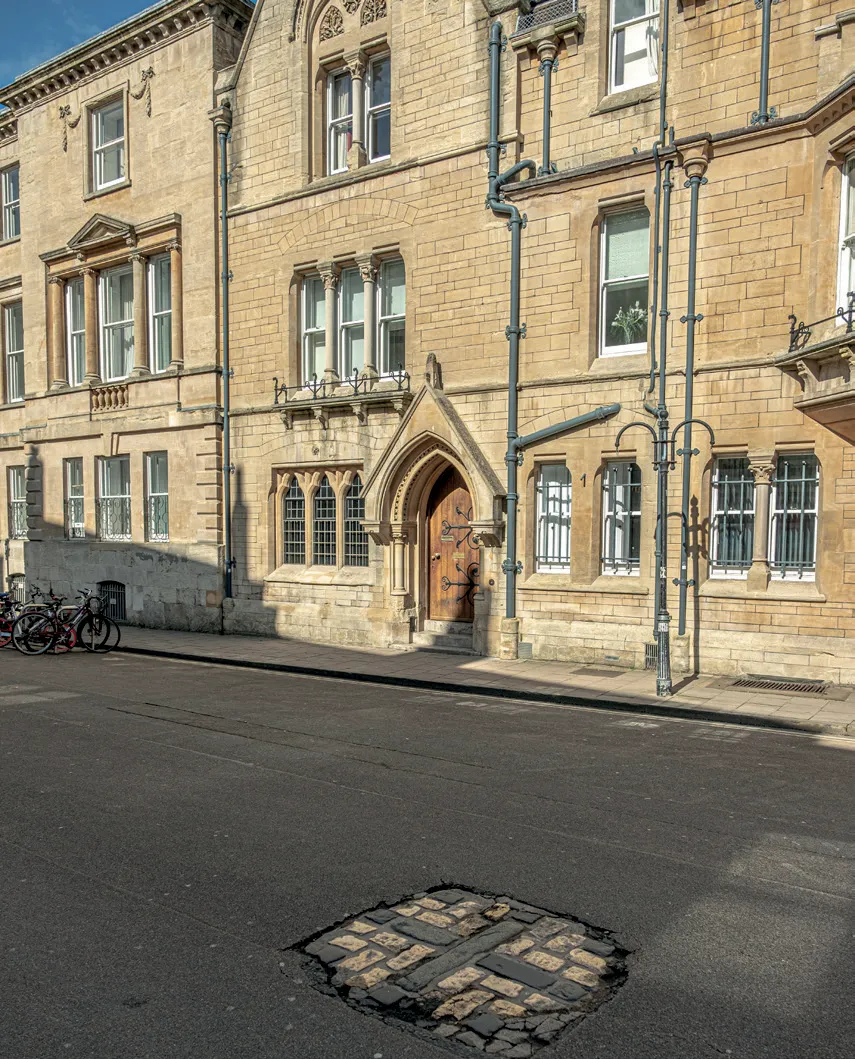
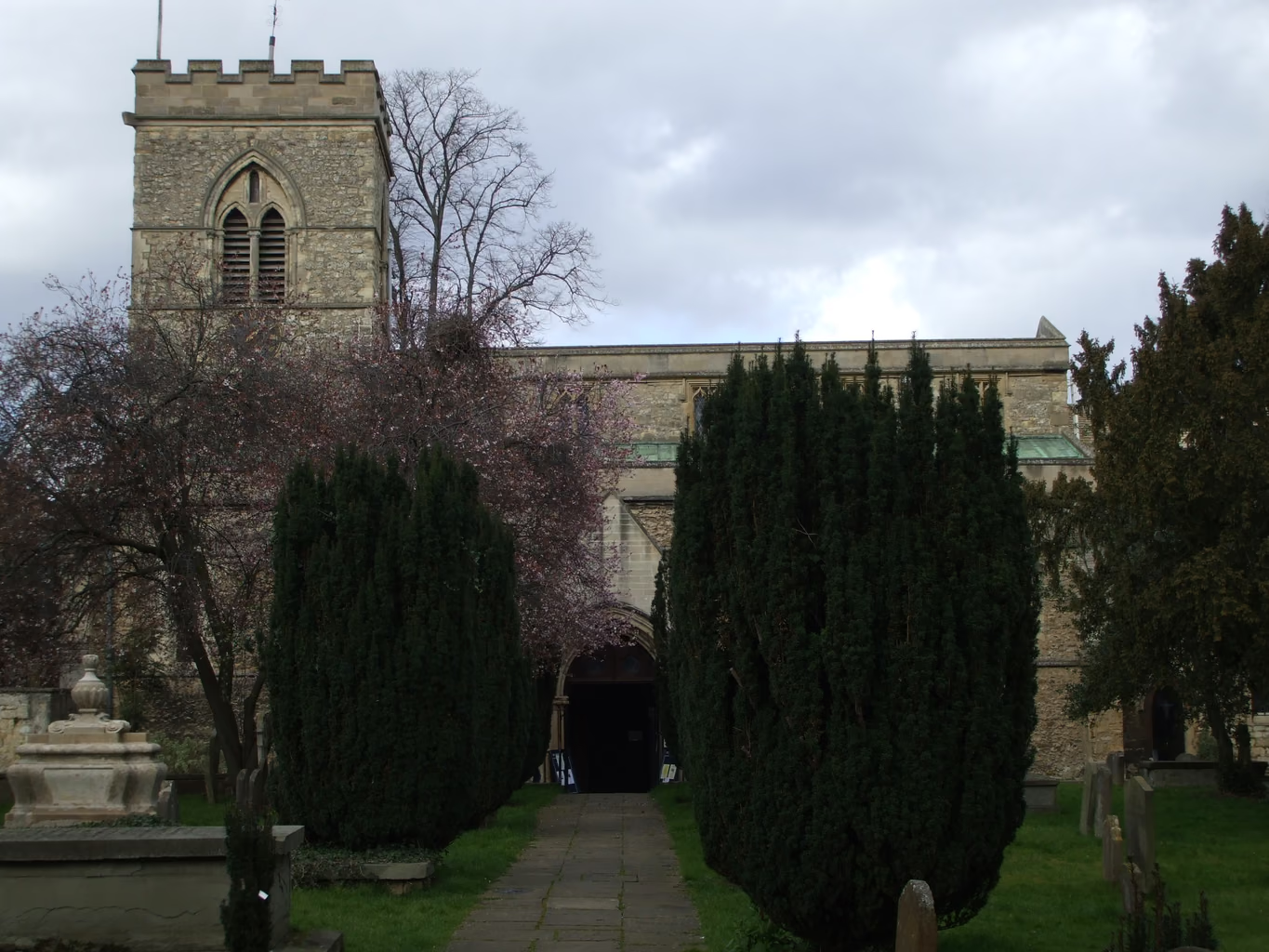
To connect 8th-century Frideswide’s out-of-town refuge at Binsey with her final resting place, pilgrims start at St Frideswide’s Well in the secluded grove around Binsey Church. There is a carving of St Margaret and the Dragon in the pulpit. Then pilgrims walk across the wildlife-rich and never-ploughed ancient common land of Port Meadow alongside the River Thames, or Isis as it is known here. Next up is St Barnabus’ Basilica of Jericho (beloved of many Thomas Hardy, PD James, John Betjeman and Philip Pullman) and it’s half-finished interior (basilisks are like dragons). Past the Blavatnik School of Government is the Oxford Oratory, once frequented by JRR Tolkien, Gerard Manley Hopkins and Evelyn Waugh, a Gothic Revival building of the Jesuits, with an astonishing ‘reredos’ of carved saintly figures around the altar and a mural of the Oxford Martyrs. Next is Pusey House, closely associated with the ‘Oxford Movement’, a movement in the 1830s to bring back more Catholic ritual into the Church of England. Maybe also pop in to Blackfriars, a theologically sophisticated Dominican priory (a place of scholarship since 13th century) with a chapel of pure, peaceful spirit. The city’s grisly place of execution during the Reformation is commemorated by an unprepossessing Martyrs Mark inlaid into Broad Street, where one might feel the urge to sing the chilling song ‘Easter Tree’, or listen to a recording of it by June Tabor.
St Michael’s Saxon Tower
Then, to make a circumambulatory journey around the line of the old city boundary to the centre of old Oxford (in the same way that you would do upon entering a Gothic cathedral), pilgrims enter via the Northgate at St Michael’s Saxon Tower, which honours Archangel Michael and St George and their two dragons on the two central pillars, as well as a Green Woman in the form of a sheelanagig (you can google what that looks like if you intrigued to find a shockingly sacred image). The Oxford Martyrs—Thomas Cranmer, Hugh Latimer, and Nicholas Ridley— were imprisoned here in the tower before their execution for their Protestant beliefs.
Walk from the tower, past the famous Radcliffe Camera, then head up the tower of University Church to achieve a birds-eye panorama of the dreaming spires. One thing to look at is an Idler’s paradise, All Souls College, which still funds fellowships that give their scholars total freedom to study whatever they want without needing to pass exams or produce theses – the college was known for its chantry tradition, where people could pay for prayers to be chanted for specific dead to secure their souls in the afterlife – the wealth that came from this still funds the cleverest Idlers in Britain. Back down at ground level in the University Church, you can see where Thomas Cranmer faced trial.
Bridge of Sighs
Then pilgrims head east under the arch of the Bridge of Sighs, via Queen’s Lane and New College, with another a strangely epic, massive reredos of carved figures in its grand chapel and a characterful tree in its cloisters. ‘New’ means old, and in fact the college founder, William of Wykeham, was a 14th-century pioneer of the collegiate educational system in both Winchester and Oxford, making famous the motto ‘Manners Makyth Man’.
Wander to the site of the old Eastgate, now the site of St Edmund Hall’s crypt before connecting via Logic Lane south to Merton College and its grand yet peaceful chapel and lovingly-cared-for gardens. After Merton, pilgrims follow the River Cherwell as it clings to the Christ Church meadows to Folly Bridge, the site of the old city’s Southgate and the river crossing which inspired the name ‘Oxford’.
Then cut back in to St Ebbe’s Church and traverse the “Westgate” shopping centre, to glimpse the magnificent medieval St George’s Tower on the approach to the Oxford Mound within which is a well that you can access if you ask nicely, and is where the 12th-century’s Geoffrey of Monmouth wrote the legends of King Arthur, part of his History of the Kings of Britain.
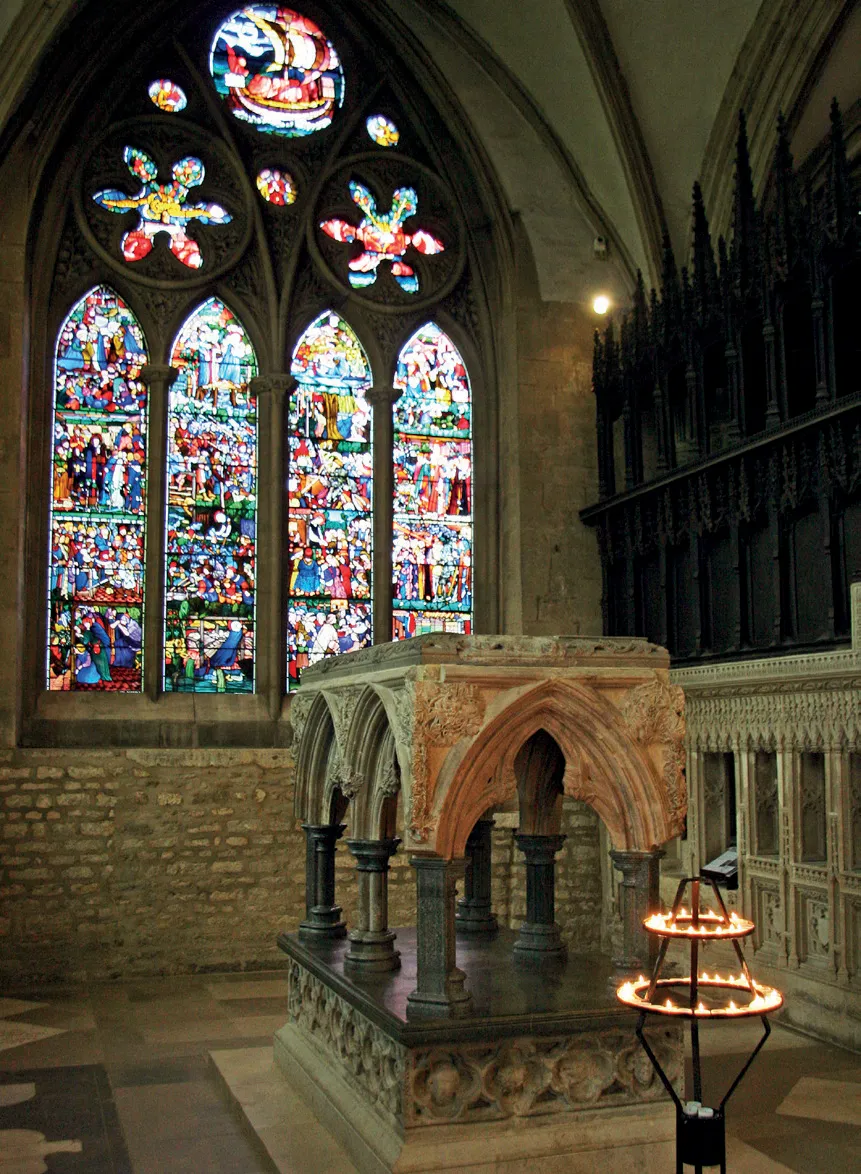
Having circumambulated the city round to its Westgate, likely sited at Bonn Square, it is time to walk the central axis to the centre, Carfax Tower, dedicated to St Martin of Tours, before the final few yards to the sacred centre of Chist Church Cathedral, housing the shrine of Frideswide displaying three green women, with foliage growing out of their faces. Frideswide is supported in the medieval stained glass by two other great women, St Catherine and St Margaret, a kind of female St George who overcame her dragon with a cross of light. St George is magnificently depicted in the huge red dragon window of the north transept. Edmund Burne-Jones’ Miracle windows tells Frideswide’s stories, and one pane shows sleeping pigs, perhaps a nod to the dragon myth of Oxford… Before you leave, lie down on the stone floor in the nave looking up at the psychedelic sacred geometry in the vaulted ceiling, it may give you answers you don’t understand. And if you want to hear the stones sing, attend choral evensong, sung by a world-class choir.
Green Men and Women
For more reading on Green Men & Women, Dragons etc, check out Guy’s article here.
Article first appeared in Idler magazine.
Route highlights


Location

Nearby Places

Nearby Sanctuaries


Discover holy places, and bring your own beliefs.
Pilgrimage by foot is connected with places and landscape, and how those places make you feel. Read about holy places.
At the British Pilgrimage Trust, we believe a pilgrimage should be made on an individual’s own terms. We are founded on the principle that we can all bring our own beliefs to the journey, accessible and welcoming to all.


Comments
0 Comments
Login or register to join the conversation.
Tom Jones
Lorem ipsum dolor sit amet, consectetur adipiscing elit. Suspendisse varius enim in eros elementum tristique. Duis cursus, mi quis viverra ornare, eros dolor interdum nulla, ut commodo diam libero vitae erat. Aenean faucibus nibh et justo cursus id rutrum lorem imperdiet. Nunc ut sem vitae risus tristique posuere.