.svg)

The Eleanor Cross Way, Lincoln to London
Midlands
.svg)




.svg)
The Eleanor Cross Way, a route marking the resting places of Queen Eleanor of Castile
Follow the path of love, grief, and devotion along the 200-mile route marking the resting places of Queen Eleanor of Castile — the beloved wife of King Edward I — whose body was carried in solemn procession from Lincoln to Westminster Abbey in the winter of 1290.
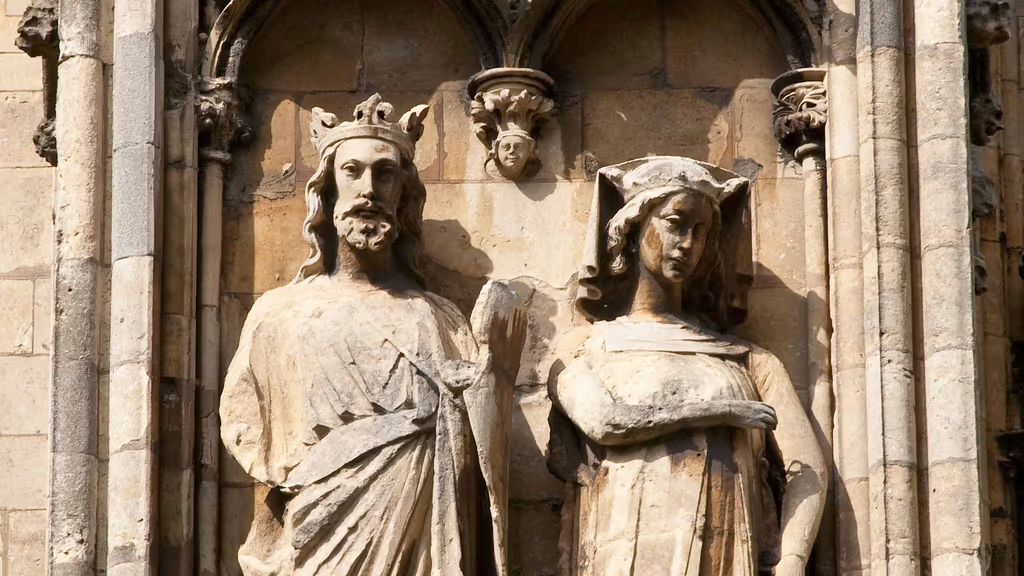
This journey through England’s heartland traces one of the most extraordinary acts of medieval remembrance. At every overnight stop on that procession, Edward ordered an elaborate stone cross to be built, each carved with images of the queen and inscribed with prayers for her soul.
The Queen Eleanor Crosses
These monuments — the Queen Eleanor Crosses — stood as both public expressions of mourning and enduring works of faith and artistry.
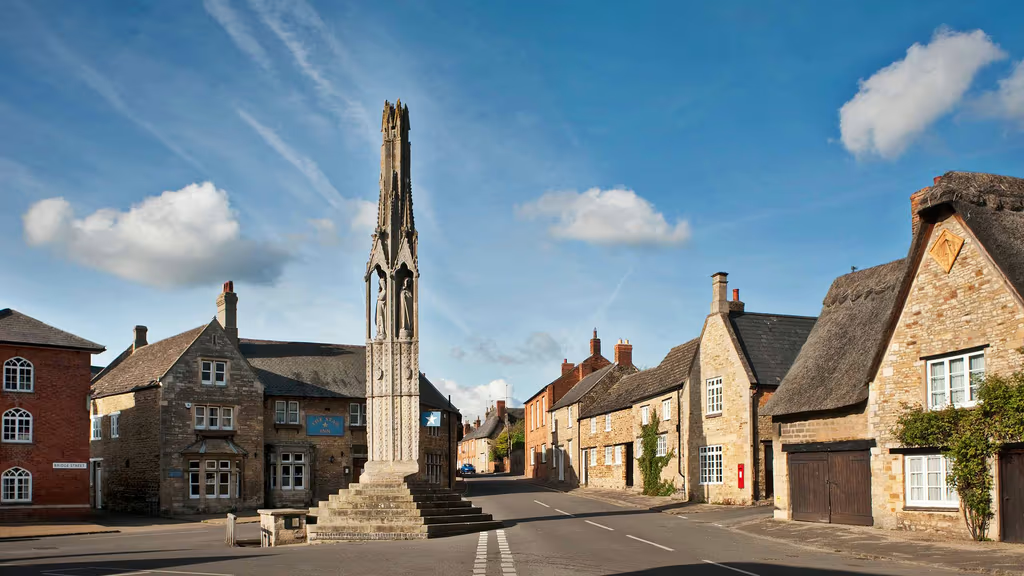
Today, only three of the original twelve crosses survive intact: Geddington, Hardingstone (near Northampton), and Waltham Cross. Yet the full route of her final journey can still be followed, connecting the ancient cathedrals, abbeys, and towns where the funeral procession paused.
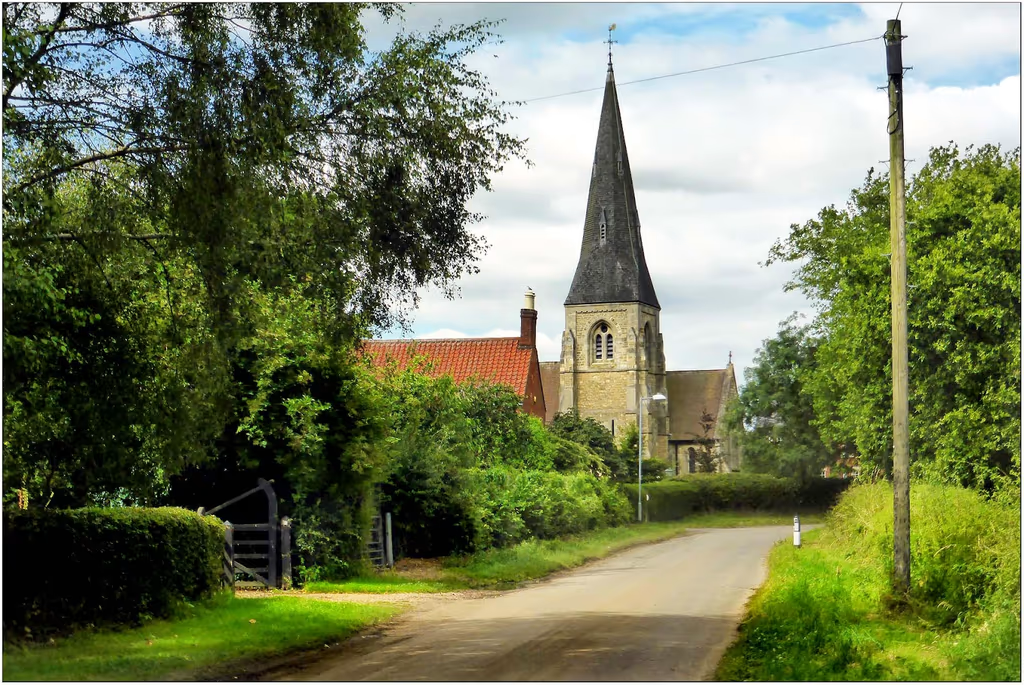
This route begins in Harby in Lincolnshire, where Eleanor died on 29th November, 1290. The Queen had been accompanying her husband King Edward I, on a campaign in the north at the time. When she became ill, she was taken to the house of Richard de Weston at Harby, near the River Trent, close to Lincoln.
From Harby, her body was borne to Lincoln Cathedral, where Eleanor’s embalmed body was prepared for travel, while her viscera were interred in Lincoln itself — a medieval custom to preserve the remains on long journeys.
From there, the cortege moved south through Grantham, Stamford, Geddington, Hardingstone, Stony Stratford, Woburn, Dunstable, St Albans, Waltham, Westcheap (London), and finally Charing Cross, near Westminster Abbey — where her body was buried at the heart of royal England.
The countryside between Lincoln and London offers a cross-section of medieval England — rolling fields, market towns, parish churches, and traces of pilgrimage roads long since absorbed into modern routes.
Along the way, walkers can visit churches dedicated to Eleanor, see fragments of the original crosses, and reflect on the human story behind this royal ritual of mourning, and a husband's act of love.
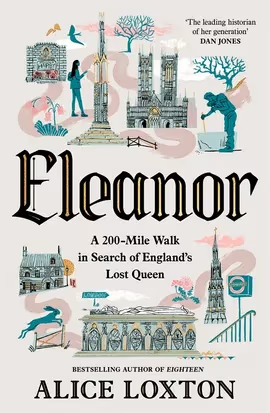
Alice Loxton's Book: Eleanor: The 200-mile search for England's Lost Queen
Historian and storyteller Alice Loxton, in her book Eleanor: The 200-Mile Search for England’s Lost Queen (2024), has reignited interest in this remarkable journey, uncovering the legend and logistics of the queen’s final passage and the lives of those who followed. Loxton’s book invites modern pilgrims to rediscover Eleanor not just as a queen consort, but as a woman whose influence on English architecture, culture, and landscape endures centuries later.
Walking the Queen Eleanor’s Crosses route today is a chance to bring this history back to life — to step through landscapes that witnessed the medieval imagination at its most poetic and monumental. It is both a journey of mourning and celebration: mourning for what was lost, and celebration of enduring love memorialised in stone.
Whether walked in full from Lincoln to Westminster, or in shorter sections between surviving crosses, this pilgrimage offers time to reflect on love, legacy, and the ways remembrance shapes our shared story.
Bring your own beliefs — and walk with Eleanor.
For great background on Queen Eleanor, read "A Journey Set in Stone" on the English Heritage website.
The Annual Queen Eleanor Charity Cycle Ride
Every year, in August, a group cycles 220 miles along this route to raise money for charity. The video that describes this wonderful charity event is below. Go here to read more about this charity ride.
See the second Google route map below for the cycle route followed by this charity. But do go to https://www.queeneleanorcycleride.org/ for the very latest details and join the fundraiser!
Route highlights
.svg)
Location


Nearby Sanctuaries
.avif)
.svg)
Discover holy places, and bring your own beliefs.
Pilgrimage by foot is connected with places and landscape, and how those places make you feel. Read about holy places.
At the British Pilgrimage Trust, we believe a pilgrimage should be made on an individual’s own terms. We are founded on the principle that we can all bring our own beliefs to the journey, accessible and welcoming to all.


.svg)
Comments
0 Comments
Login or register to join the conversation.
Tom Jones
Lorem ipsum dolor sit amet, consectetur adipiscing elit. Suspendisse varius enim in eros elementum tristique. Duis cursus, mi quis viverra ornare, eros dolor interdum nulla, ut commodo diam libero vitae erat. Aenean faucibus nibh et justo cursus id rutrum lorem imperdiet. Nunc ut sem vitae risus tristique posuere.
Tom Jones
Lorem ipsum dolor sit amet, consectetur adipiscing elit. Suspendisse varius enim in eros elementum tristique. Duis cursus, mi quis viverra ornare, eros dolor interdum nulla, ut commodo diam libero vitae erat. Aenean faucibus nibh et justo cursus id rutrum lorem imperdiet. Nunc ut sem vitae risus tristique posuere.