

Village Burials: The Holy Acres Project
08
Nov
,
2026


Rupert Sheldrake
At present, the proportion of people in Britain who are cremated rather than buried is about 80%. This is not because most people have ideological convictions in favour of cremation, but primarily for practical reasons. In cities, where most people live, burial grounds are few and far between and are often large municipal sites in rather desolate environments.
Until the mid-20th century, the great majority of people in Britain were buried. Cremation was promoted in the late 19th century by esoteric groups such as the Theosophists, inspired by cremation practices in India. The first crematorium in Britain was established in Woking in 1878, and the first official cremation took place there in 1885, after a court ruling in 1884 found that cremation was not unlawful. Cremation was regulated by the Cremation Act of 1902 and was accepted by the Anglican Church early in the 20th century. The Roman Catholic ban on cremation was lifted only in 1963 and in the Orthodox Church this practice is still strongly discouraged. But for those who prefer burial, the options are limited.
A new initiative began over 30 years ago with woodland and ‘green’ burials, promoted by the Natural Death Movement, with burials in agricultural land, in some cases with a tree being planted over the grave. These green woodland burials both provide a rural resting place for the body and help create new woodland. This movement is now well established, and some farmers have adopted it as a means of diversification and as an important income stream. Prices of burial plots range from £1,200 to £5,000. At the other end of the spectrum, the few remaining plots in Highgate Cemetery in London start at over £32,000, and at Kensal Green £20,000 – and that is for a mere 50-year lease.
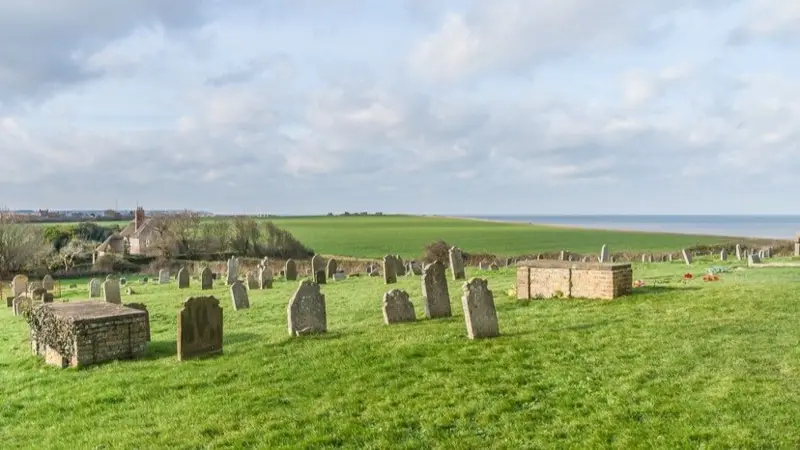
What is not on offer at present is the option of burial in a rural setting near a church. Many village churchyards are already full, and others are almost full, and most villagers do not want the remaining space in their churchyard to be taken up by an influx of bodies from nearby cities. A separate burial ground near the church, rather than in the churchyard itself, would avoid this problem.
The provision of sites for burials near the church would meet an unfulfilled need, and could generate income for the church, helping to preserve it for generations to come. The church itself could be used for the interment ceremony.
The land would need to be owned by a charitable trust – a Holy Acres trust – set up for the purpose of funding the church, rather than by the church itself. A parish can only charge the burial fees set nationally by the Parochial Fees Order, and its churchyard is subject to regulations made by the diocesan chancellor, whereas a trust would be free to make its own rules and decide on its own charges.
Under the Endowments and Glebe Measure 1976, glebe land is now held by diocesan boards of finance. Where there is glebe land in the village, the diocesan board of finance could give it to a local Holy Acres trust, and in return could receive, say, 10% of the profits. The church would nominate the trustees, who could include the vicar and churchwardens. Alternatively, a local landowner or farmer might donate the land to ensure the future maintenance and activity of the church.
For an attractive site near a church it would probably be possible to charge around £10,000 per plot. There is space for about 600 burial plots in an acre, so one acre could generate up to £6 million at today’s prices, and more if prices go up with inflation. If diocesan finance boards received 10% from glebe land put into one of these trusts, that would amount to about £600,000 over the years, far more than they could otherwise make by renting or selling the land. This would therefore be a fiscally responsible step to take.
Part of the land could also be used for the burial of ashes, which would require much smaller plots, about 2x2 feet, and which would be cheaper, say £2,000 each.
Families of those who have been interred at the church could also be invited to come to a requiem or memorial service held in the church on All Souls’ Day each year (November 2nd) or on some other special day. This would give the church a serious liturgical purpose and help both the departed and their families. And many people would like the idea of being remembered in an annual commemorative celebration, as opposed to being forgotten.
If a few parishes carry out this experiment, and if it works, it would probably be adopted quite widely. People would then have a choice about their burial that they do not have at present. And not many burials per year would be needed to provide a steady stream of income to help maintain and preserve the churches themselves. In fact, it might be necessary to ration the number per year to three or four burials to make sure that this endowment lasted for many decades.
Some cemeteries enable people to purchase plots in advance, paying a deposit, with the remainder payable on burial. In this case the income for a Holy Acres trust could begin even before there were any graves.
There are surprisingly few rules about planning permission for burials. The land should not be waterlogged, and there should be no run-off problem; graves should also be kept a safe distance from wells, springs and watercourses, following Environment Agency guidance. But if the burial sites are near existing churchyards which cause no problem, that would allay worries on this score. Also, there should be access and some parking nearby, but the regular church parking spaces would probably suffice. And there should be an increase in biodiversity (in England, a 10% ‘biodiversity net gain’ is now required for most planning permissions), which could be accomplished by sowing wildflowers.
These burial grounds could be blessed by a bishop or priest, so that they are not simply secular spaces, but they should not be called “consecrated” because, for technical legal reasons, that would bring them under the diocese’s faculty jurisdiction and regulations.
Local undertakers would be informed about available plots and prices, so that they could offer this option to their customers. This would probably be all the marketing that is needed.
Rupert Sheldrake
October 2026

Further reading


Comments
0 Comments
Login or register to join the conversation.
Tom Jones
Lorem ipsum dolor sit amet, consectetur adipiscing elit. Suspendisse varius enim in eros elementum tristique. Duis cursus, mi quis viverra ornare, eros dolor interdum nulla, ut commodo diam libero vitae erat. Aenean faucibus nibh et justo cursus id rutrum lorem imperdiet. Nunc ut sem vitae risus tristique posuere.