

Golden Valley Pilgrim Way
Midlands




Why walk the Golden Valley Pilgrim Way
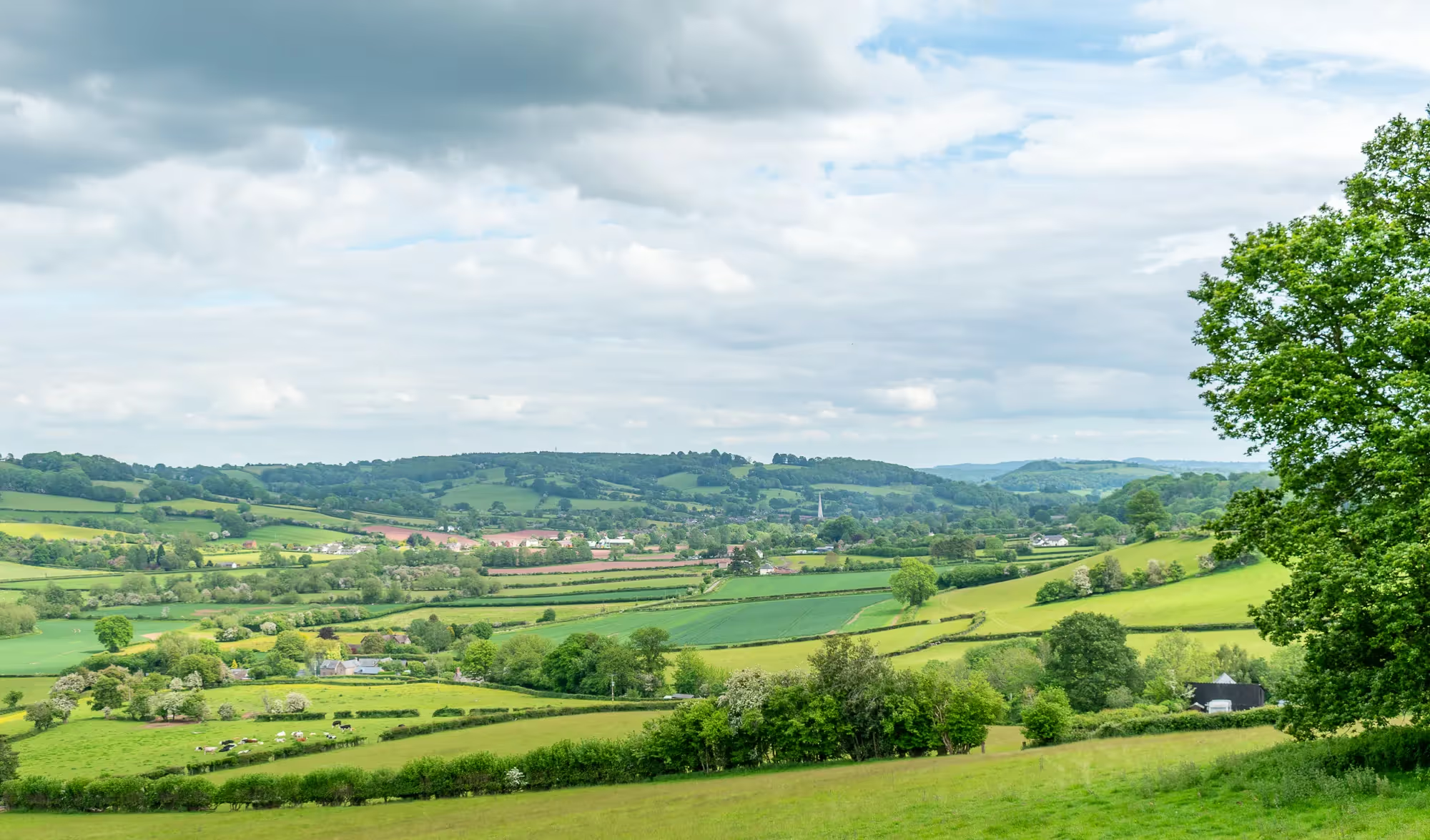
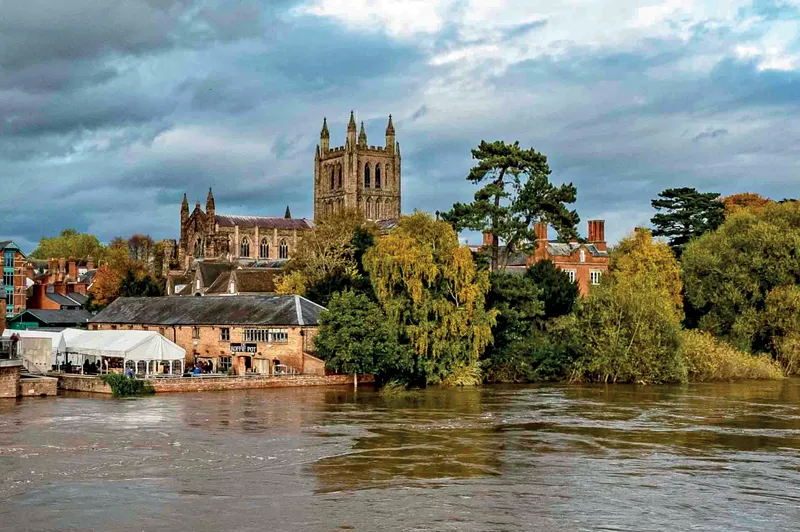
Leave Hereford Cathedral by the north porch, cross the River Wye and walk west into some of the quietest country in England. Over six or seven days you pass cider orchards, 800-year-old oaks, a Neolithic tomb older than Stonehenge, Norman castles, holy wells and the great Cistercian church of Dore Abbey. Then the path brings you home to the cathedral.
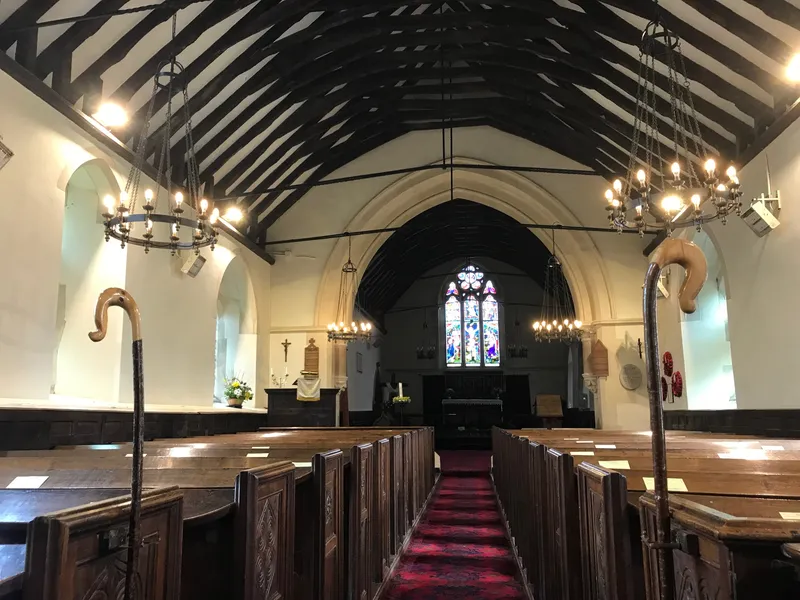
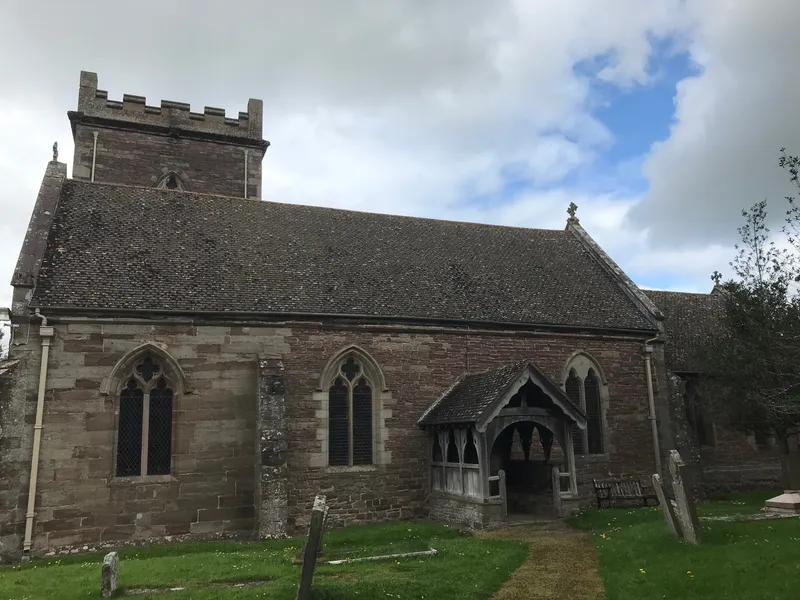
Each night you sleep in a parish church. These night sanctuaries open their doors to pilgrims with camp beds, and your donation helps keep small rural churches alive. "Waking up with the morning light streaming through an east window is something truly special," says Revd Simon Lockett, who created the Way with the parishes of the Abbeydore Deanery in 2022.
The Way is for people of any faith or none. Walk it in a week, in three or four days, by bike, or one stretch at a time.
- Sleep in churches, from Norman village chapels to the cloisters of Hereford Cathedral
- Drink from the holy wells of St Peter, St Clydog and St Martin
- Stand at Arthur's Stone, a 5,700-year-old chambered tomb above the Golden Valley
- Cross the hills below the Cat's Back ridge, with the Black Mountains and Wales ahead of you
- Rest in Dore Abbey, one of the finest Cistercian churches surviving in western Britain
- Swim in the Wye at Bredwardine, and eat your way through cider farms, farm ice cream and village pubs
Route at a glance
- Distance: about 66 miles (100 km), circular
- Time: 7 days on foot. A 3–4 day loop and an 82-mile cycle route also exist
- Start and finish: Hereford Cathedral, north porch
- Climbing: about 1,700 m (5,500 ft) of ascent in total; highest point about 400 m (1,300 ft)
- Difficulty: moderate. Field paths, green lanes, holloways and quiet lanes, with many stiles. Often wet underfoot, with steep climbs to Arthur's Stone and onto Ewyas Harold Common
- Waymarking: being added by the Deanery, so carry the GPX or an OS map
- Where you sleep: night sanctuaries in 13 churches and village halls, booked through the Abbeydore Deanery. Camp beds provided
- Cost: a suggested donation per person per night, paid when you book. It goes to the churches that host you
- Maps: OS Explorer 189 (Hereford & Ross-on-Wye) and OS Explorer OL13 (Brecon Beacons East)
- Where: Herefordshire, in the Welsh Marches
- Nearest station: Hereford, a 20-minute walk from the cathedral
Suggested 7-day itinerary
- Day 1: Hereford Cathedral – Eaton Bishop – Madley, about 6.5 miles. Sleep at Madley (or Eaton Bishop at 5 miles, Tyberton at 11)
- Day 2: Madley – Tyberton – Moccas – Bredwardine – Arthur's Stone – Dorstone, about 13 miles. Sleep at Dorstone (or Bredwardine village hall)
- Day 3: Dorstone – Snodhill – Peterchurch – Michaelchurch Escley, about 9.5 miles. Sleep at Michaelchurch Escley (or Peterchurch for a short day)
- Day 4: Michaelchurch Escley – Craswall – Cat's Back – Llanveynoe – Longtown – Clodock, about 11.5 miles. Sleep at Clodock (or Craswall, 4 miles in)
- Day 5: Clodock – Walterstone – Llancillo – Rowlestone – Ewyas Harold, about 8 miles. Sleep at Ewyas Harold (or Walterstone village hall)
- Day 6: Ewyas Harold – Ewyas Harold Common – Dore Abbey – Kingstone, about 9 miles. Sleep at Kingstone
- Day 7: Kingstone – Thruxton – Clehonger – Hereford Cathedral, about 8 miles. Sleep in the cathedral cloisters if you stay on
Suggested 3–4 day itinerary
A shorter loop through the lower Golden Valley and the Wye, about 38 miles.
- Day 1: Hereford Cathedral – Eaton Bishop – Madley – Preston on Wye – Tyberton, about 10.5 miles. Sleep at St Mary's, Tyberton
- Day 2: Tyberton – Moccas – Bredwardine – Arthur's Stone – Dorstone, about 9 miles. Sleep at St Faith's, Dorstone
- Day 3: Dorstone – Peterchurch – Madley, about 12 miles. Sleep at Madley (or stop at St Peter's, Peterchurch, for a short day)
- Day 4: Madley – Eaton Bishop – Hereford Cathedral, about 6.5 miles, arriving about 2pm. Sleep in the cathedral cloisters if you stay on
You can also walk any single stage as a day pilgrimage.
The story of the Way
A valley named for water. The Golden Valley is the valley of the River Dore, which runs south-east from Dorstone beneath the Black Mountains. Its name probably comes from the Welsh dŵr, water, which Norman French ears heard as d'or, gold.
Nearly 6,000 years of sacred ground. Around 3700 BC, Neolithic farmers raised Arthur's Stone on the ridge above Dorstone. Excavations in 2022 showed it stood within a wider ritual landscape. Local tradition says it inspired the Stone Table in C.S. Lewis's The Lion, the Witch and the Wardrobe.
The Welsh saints. This was once the Welsh kingdom of Ewyas, and its saints are Welsh. St Dyfrig (Dubricius) is said to have been born at Madley around 450 and to have founded the church at Moccas. St Clydog was a king of Ewyas, murdered and buried where the oxen pulling his body stopped: Clodock. St Beuno was given land at Llanveynoe by the King of Gwent. Llancillo first belonged to St Tysilio.
A cathedral of two saints. Hereford Cathedral grew around the grave of St Ethelbert, the young East Anglian king killed on King Offa's orders in 794. In 1320 Bishop Thomas Cantilupe was canonised, and his shrine became one of the great pilgrim destinations of medieval England.
Castles and monks. The Normans fortified the border early. Ewyas Harold is one of the few castles built in England before 1066, and Snodhill and Longtown followed. The monks came next. Cistercians from Morimond in Burgundy settled at Dore in 1147, and Grandmontine monks built a priory high under the Black Mountains at Craswall around 1225.
After the Reformation. Dore Abbey was dissolved in 1536. In 1633 John, Viscount Scudamore, restored its ruined east end as a parish church, a rare survival of the Laudian style. The diarist Francis Kilvert spent his last years as vicar of Bredwardine and is buried there.
A new pilgrimage. For years Revd Simon Lockett spent a silent week each year walking in the footsteps of St Francis through Tuscany and Umbria, sleeping in monasteries and convents. He came home asking why Britain could not have the same. With the 35 churches of the Abbeydore Deanery, he created the Golden Valley Pilgrim Way, which opened in 2022 on the British Pilgrimage Trust's Sanctuary model: churches open their doors to pilgrims overnight in return for a donation. In March 2023 Hereford Cathedral opened its cloisters to sleeping pilgrims. Since then, pilgrims' donations have brought welcome income to the valley's small parish churches. In 2025 Simon received the unsung hero award at the Visit Herefordshire Tourism Awards.
The Deanery describes the Way as "a wild, frugal, contemplative, spiritual experience of divine presence", open to people of any faith or none. Read our interview with Simon Lockett.
The route, stage by stage
Distances are approximate. Pubs and cafés in the valley often close on Mondays and other weekdays, so check before you rely on them.
Day 1: Hereford Cathedral to Madley, about 6.5 miles
Begin inside the cathedral. Light a candle at the shrine of St Thomas Cantilupe, find the Thomas Traherne windows in the Audley Chapel, and see the Mappa Mundi, the world drawn with Jerusalem at its centre. Look for the scallop shell set into the paving of the north porch, then leave by the west door. Cross the Old Bridge over the Wye and follow the river before the path climbs out of the city through Ladies Coppice and Tuck Mill, past the site of a Roman camp.
- Holy places: Hereford Cathedral · St Michael and All Angels, Eaton Bishop, with stained glass from about 1330 · The Nativity of the Blessed Virgin Mary, Madley, a huge church whose crypt once held a healing statue of the Virgin that drew medieval pilgrims
- Food and drink: buy lunch in Hereford. Madley has a village shop, the Red Lion, the Comet and a takeaway. The Church Stables at Madley have cooking facilities for pilgrims
- Sleep: Madley. Eaton Bishop (5 miles) and Tyberton (11 miles) are alternatives
- Take care: a very rickety stile near Cophill
Day 2: Madley to Dorstone, about 13 miles
The longest and most varied day. Walk on to Preston on Wye and Tyberton, then along an old green lane and through Moccas Park, where oaks over 800 years old shelter a herd of deer. Follow the Wye to Bredwardine, swim if the river allows, then climb the steepest hill of the whole Way to Arthur's Stone. Drop down the Spoon Lane holloway into Dorstone.
- Holy places: St Mary's, Tyberton, a 1720 brick church with a carved oak reredos full of symbols · St Michael and All Angels, Moccas, a Norman church on a site founded by St Dyfrig · St Andrew's, Bredwardine, with a sheela-na-gig, Norman carving and Francis Kilvert's grave · Arthur's Stone · St Faith's, Dorstone, with an inscription dated 1256
- Food and drink: no village shop on this leg, so carry lunch from Madley. The Yew Tree at Preston on Wye, the Red Lion at Bredwardine and the Pandy Inn at Dorstone. Bycross Farm shop and campsite welcome pilgrims (short detour; check opening hours). Water tap and portaloo outside Bredwardine church
- Sleep: St Faith's, Dorstone, or Bredwardine village hall
- Take care: the green lane rutted deep when wet · a stretch of the B4352 with bends and fast traffic, the worst road walking on the Way · a strong current on the far side of the Wye · the steep climb from Fine Street to Arthur's Stone
- Short cut: at Lower Crossway, stay on the lane straight down to Dorstone if it is getting late
Day 3: Dorstone to Michaelchurch Escley, about 9.5 miles
Walk down the Golden Valley itself. Holloways and the Herefordshire Trail bring you to Peterchurch, past the lane that climbs to Snodhill Castle. After the holy well, ford the infant River Dore and climb through woods to Canon Tump nature reserve and the Escley Brook.
- Holy places: Snodhill Castle, begun about 1068 with a rare 13-sided keep, open to visitors all year (short detour) · St Peter's, Peterchurch, a Norman church with an apse, a painting of the fish with a golden chain, and an ancient churchyard yew · St Peter's Well, restored in 2015, with steps once used for baptism · St Michael's, Michaelchurch Escley, with a medieval wall painting of Christ surrounded by working tools
- Food and drink: the Pandy Inn as you leave Dorstone. In Peterchurch, the Hub café inside St Peter's (if open), the village stores, the Boughton Arms, the Nag's Head and Food for Thought. The Bridge Inn, next to Michaelchurch Escley church
- Sleep: Michaelchurch Escley, or Peterchurch for a short day
- Take care: the track entrance near Slough Bridge is hidden by bracken · Great Wood is hard to follow, so use the GPX · cross the B4348 with care
Day 4: Michaelchurch Escley to Clodock, about 11.5 miles
The wildest day, into the Black Mountains. Climb by farms and woods to Craswall, then follow an old drovers' road up to the foot of the Cat's Back ridge. Descend by Cwm Steps to Llanveynoe and the Olchon valley, then follow the River Monnow past Longtown Castle to Clodock. If you stop at Craswall after 4 miles, it becomes something of a rest day.
- Holy places: St Mary's, Craswall, a tiny medieval church with a modern Celtic cross by Ken Watkins; the ruins of Craswall's Grandmontine priory lie nearby · the Cat's Back, a narrow ridge with views into Wales · St Peter's, Llanveynoe, first dedicated to St Beuno, with two carved slabs from the 9th and 10th centuries · Cae Thomas' Well in the Olchon valley, said to heal weak eyes · Longtown Castle, the round stone keep of the de Lacy lords · St Clydawg's, Clodock, with a wide Norman nave, wall paintings, box pews and a 9th-century gravestone
- Food and drink: the Bull's Head and Chapel House Farm shop at Craswall · the Crown and Hopes village store at Longtown (reach the shop before it closes) · the Cornewall Arms at Clodock
- Sleep: St Clydawg's, Clodock, or St Mary's, Craswall
- Take care: the footbridge marked on the OS map at Craswall is not safe · a hard stile in the wood at Coed Robin · a hard-to-see stile in the Wern valley
- Short cuts: a lane runs direct to Llanveynoe, skipping Cwm Steps, and on to Longtown if you are running late
Day 5: Clodock to Ewyas Harold, about 8 miles
A gentler day across the border hills, linking four small churches. Start at St Clydog's Well by the river, cross quiet fields to Walterstone and its common, then wind through Llancillo Wood to Rowlestone and its farm café.
- Holy places: St Clydog's Well, a true spring across the Monnow · St Mary's, Walterstone, with a 13th-century font and the Cecil family vault, ancestors of Elizabeth I's Lord Burghley · St Peter's, Llancillo, first dedicated to St Tysilio (ask at Llancillo Court to visit) · St Peter's, Rowlestone, with a carved tympanum of Christ in Majesty by the Herefordshire School of sculptors · St Michael and All Angels, Ewyas Harold
- Food and drink: the Carpenters Arms at Walterstone · Rowlestone Court Farm café and its farm ice cream (check opening) · Ty Gwyn Cider · the chip shop and village stores in Ewyas Harold
- Sleep: Ewyas Harold, or Walterstone village hall
- Take care: a run of fields with no landmarks, so use the GPX · a rickety, often overgrown boardwalk · a blackthorn thicket across the right of way (follow walkers' trodden line)
- Short cut: a lane to the Carpenters Arms avoids an overgrown section near Cwm Farm
Day 6: Ewyas Harold to Kingstone, about 9 miles
Climb steeply onto Ewyas Harold Common, now owned by the community, and follow the Herefordshire Trail down to Dore Abbey. Give it time. Then cross the valley floor by Mill Wood and Barrow Common to Kingstone.
- Holy places: St Martin's Well on Ewyas Harold Common · Dore Abbey (see Visiting Dore Abbey, below) · St Michael and All Angels, Kingstone, with a huge Norman font of breccia
- Food and drink: the Red Cow at Morehampton Park Farm · the Bull Ring in Kingstone
- Sleep: St Michael and All Angels, Kingstone
- Take care: the steep path onto the Common · Nells Wood can be very overgrown in summer · a confusing stretch near Blackmoor Farm
- Worth a detour: Kilpeck, a few miles east, has some of the finest Romanesque carving in England, including 86 carved corbels
Day 7: Kingstone to Hereford Cathedral, about 8 miles
The homecoming. Field paths lead to Thruxton and Clehonger, then rejoin Day 1's path along Ruckhall Lane and the Wye. Enter the cathedral by the north porch where you began.
- Holy places: St Bartholomew's, Thruxton, with a font dated 1677 and 14th-century Crucifixion glass · All Saints, Clehonger, with the effigy of Sir Richard Pembridge (1343) and a Holy Thorn said to have bled when someone tried to cut it down · Belmont Abbey, a Benedictine monastery that keeps the daily hours of prayer, a short footpath away
- Food and drink: nothing on the route, so carry lunch from Kingstone
- Sleep: the cloisters of Hereford Cathedral, if you stay on
- Take care: fast traffic when crossing the B4348 and the busy B4349
By bike
An 82-mile cycle route links the same valleys on lanes and tracks. Find the route map on the Abbeydore Deanery website.
Holy places along the Way
Holiness here lives in stone and water, trees and hills. This list follows the walking order.
Cathedral and abbeys
- Hereford Cathedral (St Mary the Virgin and St Ethelbert): shrines of St Ethelbert and St Thomas Cantilupe, the Mappa Mundi, the Chained Library, the Traherne windows and, east of the building, the dry well linked to St Ethelbert. More about Hereford Cathedral
- Dore Abbey: Cistercian abbey church founded in 1147 and restored in 1633 (see Visiting Dore Abbey, below)
- Belmont Abbey: a living Benedictine community near Clehonger that keeps the daily hours of prayer
- Craswall Priory: ruins of a Grandmontine priory of about 1225, one of the highest monastic sites in England
Churches on the route
- St Michael and All Angels, Eaton Bishop (night sanctuary): stained glass of about 1330
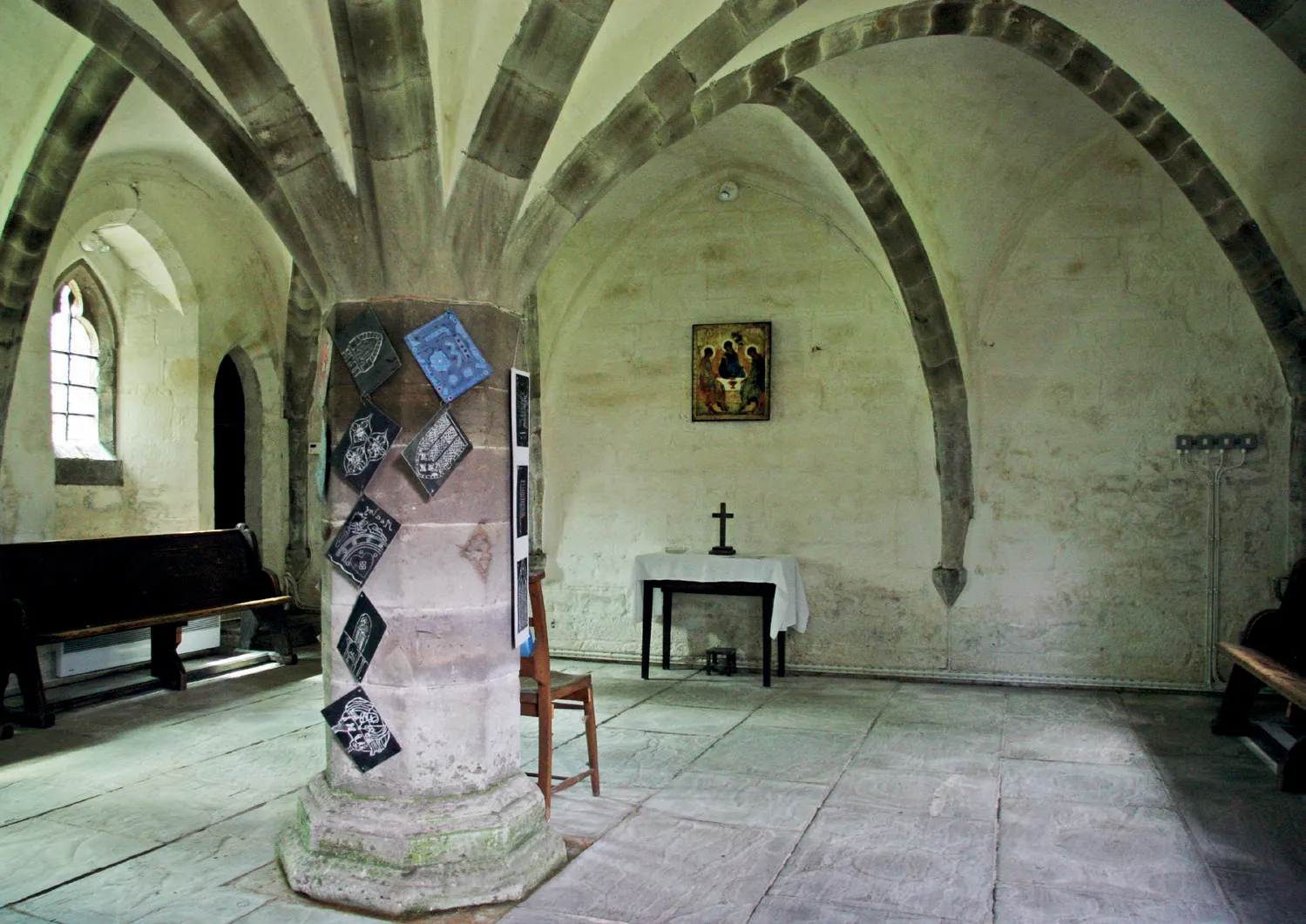
- Nativity of the Blessed Virgin Mary, Madley (night sanctuary): vast medieval pilgrim church and crypt; said birthplace of St Dyfrig
- St Mary's, Tyberton (night sanctuary): 1720 brick church with a symbolic oak reredos
- St Michael and All Angels, Moccas: Norman church on a site founded by St Dyfrig
- St Andrew's, Bredwardine (the village hall is a night sanctuary): sheela-na-gig, Francis Kilvert's grave and the tomb of a knight killed at Agincourt
- St Faith's, Dorstone (night sanctuary): inscription dated 1256
- St Peter's, Peterchurch (night sanctuary): Norman apse, painted fish with a golden chain, ancient yew
- St Michael's, Michaelchurch Escley (night sanctuary): wall painting of Christ surrounded by working tools
- St Mary's, Craswall (night sanctuary): tiny upland church with a Celtic cross by Ken Watkins
- St Peter's, Llanveynoe: carved slabs of the 9th and 10th centuries; first dedicated to St Beuno
- St Clydawg's, Clodock (night sanctuary): shrine church of a murdered king, with wall paintings and a 9th-century gravestone
- St Mary's, Walterstone (the village hall is a night sanctuary): 13th-century font and the Cecil family vault
- St Peter's, Llancillo: first dedicated to St Tysilio, with a medieval cross base
- St Peter's, Rowlestone: Herefordshire School tympanum of Christ in Majesty
- St Michael and All Angels, Ewyas Harold (night sanctuary): detached 13th-century tower and a medieval effigy
- St Michael and All Angels, Kingstone (night sanctuary): great Norman font of breccia
- St Bartholomew's, Thruxton: font dated 1677 and medieval Crucifixion glass
- All Saints, Clehonger: effigy of Sir Richard Pembridge and a Holy Thorn
Holy wells
- St Peter's Well, Peterchurch: once three springs, with a stone head of St Peter and steps for baptism
- Cae Thomas' Well, Olchon valley: said to help weak eyes and rheumatism
- St Clydog's Well, Clodock: a true spring across the River Monnow
- St Martin's Well, Ewyas Harold Common
- St Ethelbert's Well, Hereford: now dry, east of the cathedral
Stones, hills and ridges
- Arthur's Stone: a Neolithic chambered tomb of about 3700 BC, cared for by English Heritage
- Merbach Hill and the Dorstone ridge: views over the Wye and the Golden Valley
- The Cat's Back: a knife-edge ridge on the edge of the Black Mountains. The Way passes its foot; climb it for views into Wales
- Ewyas Harold Common and Canon Tump: open common and a small nature reserve
- Castle mounds: Snodhill, Longtown and Ewyas Harold, plus Norman mottes beside the churches at Llancillo, Walterstone, Rowlestone and Thruxton
Trees
- Moccas Park: oaks over 800 years old in a National Nature Reserve
- Peterchurch yew: recently estimated at about 3,000 years old
- Holy Thorns: said to flower at midnight on Old Christmas Eve (5 January), at Eaton Bishop, Tyberton, Bredwardine, Peterchurch, Rowlestone, Kingstone and Clehonger
- Churchyard yews and old orchards throughout the valley
Rivers
- The Wye: at Hereford and Bredwardine, where you can swim
- The Dore: the Golden Valley's own river, forded on Day 3
- The Escley Brook, Olchon Brook and Monnow: mountain streams of Days 4 and 5, with a small waterfall in the Olchon valley
Worth a separate visit
Kilpeck (Romanesque carving) · Partrishow, St Issui's church, hermit's cell and holy well (in Wales) · Llanthony Priory · Cwmyoy's leaning church · Garway, the Templars' church · Bacton, Blanche Parry's church · Vowchurch and Turnastone
Pilgrim practices to try on this Way
A pilgrimage is a walk with purpose, made on your own terms and needing no set beliefs. These practices help turn miles into meaning. Try any that speak to you, and if one does not feel right, do something else instead.
- Set an intention. Dedicate the journey to something you want help with, or to giving thanks. Try it by the scallop shell in Hereford Cathedral's north porch, before your first step
- Carry a contact relic. Bring a small stone or shell from home and touch it to holy things along the way: St Thomas Cantilupe's shrine, Arthur's Stone, each holy well. Take it home at the end
- Walk in silence. Tread quietly, especially through woodland. Try the first hour of each morning, Moccas Park, or the woods above Michaelchurch Escley
- Walk slowly. Pace matters less than attention. "Pilgrimage isn't about performance," says Simon Lockett
- Circle a church before entering. Walk round it once, then pause in the porch before crossing the threshold. Try it first at Eaton Bishop
- Light a candle at St Thomas Cantilupe's shrine in Hereford, or in any church where candles are offered
- Kneel, or lie down and look up. Kneel at the altar and think about what matters, or lie on the floor and gaze at the vaults of Dore Abbey and the roofs of the valley churches
- Sing, or read a poem aloud. Plainchant in Dore Abbey, where Cistercian monks sang for nearly 400 years; Traherne in Hereford; Kilvert's diary at Bredwardine
- Visit the holy wells. Touch the water, bless yourself with it, or wash your face and hands at St Peter's Well in Peterchurch, St Clydog's Well at Clodock and St Martin's Well on Ewyas Harold Common
- Immerse yourself in wild water, imagining yourself washed clean. The Wye at Bredwardine, in calm conditions only
- Touch ancient trees and stones: the Moccas oaks, the Peterchurch yew, Arthur's Stone (respect the monument)
- Walk barefoot on the grass of Ewyas Harold Common, or around the labyrinth at Dore Abbey
- Look at the sky. Lie back on the ridge by Arthur's Stone or below the Cat's Back and let the clouds move through you
- Walk a labyrinth: the grass labyrinth in Dore Abbey's old cloister
- Take a holy nap in a quiet pew in any church you pass
- Join the prayers of others: Evensong at Hereford Cathedral, the daily offices at Belmont Abbey, services at Dore Abbey
- Sleep in sanctuary. Say a night prayer before sleep, and wake with the light through the east window
- Collect stamps in your pilgrim credential at each night-sanctuary church
- Give. Leave a donation, sign the visitors' book, and buy from the valley's farms, shops and pubs
- Keep the old feasts: St Ethelbert on 20 May, St Thomas of Hereford on 2 October, and the Holy Thorns' midnight flowering on Old Christmas Eve, 5 January
- Arrive. Come back in by Hereford Cathedral's north porch, give thanks at the shrine, and record your arrival
- Carry it home. Clear your diary for the walk, set an out-of-office, and give yourself time to reflect in the weeks afterwards
Pilgrimage with the British Pilgrimage Trust is open to all. Bring your own beliefs.
Visiting Dore Abbey
Dore Abbey is the spiritual heart of the valley, and the Abbeydore Deanery that runs the Way takes its name from it. Day 6 passes right beside it on the Herefordshire Trail, so plan a long pause.
Its story. Robert Fitz Harold of Ewyas founded the abbey around 1147, and white-robed Cistercian monks came from Morimond in Burgundy. Wool made it rich, and it was enlarged through the 13th and 14th centuries. In 1321 it received a relic of the Holy Cross. The abbey was dissolved in 1536 and its nave fell into ruin. In 1633 John, Viscount Scudamore, restored the monks' east end as a parish church, adding the tower, carved oak and coloured glass. The church, first dedicated to the Blessed Virgin Mary, also became dedicated to the Holy Trinity.
What to look for:
- The medieval presbytery and ambulatory, among the finest Cistercian architecture surviving in western Britain
- The Renaissance screen and 17th-century stained glass from Scudamore's restoration
- The medieval altar stone, returned to use in 1633
- Medieval roof bosses saved when the abbey was dissolved
- The tomb of Lady Matilda de Bohun (1318)
- Traces of medieval painted plaster
- Outside, a grass labyrinth in the old cloister, picnic tables in the orchard, and a Quiet Garden
Opening. Every day of the year, from 9am until after 5pm, and often later in summer.
Worship. The abbey holds contemplative, choral and Taizé services, Holy Communion and quiet mornings. There are no services in January and February. Check times on the Dore Abbey website.
Groups. Guided tours can be arranged through the abbey. The Friends of Dore Abbey, founded in 1999, care for the building and welcome new members.
A practice for this place. Walk the labyrinth slowly before you set off again. Its single winding path to the centre and back is a pilgrimage in miniature.
Practical information
Booking a night sanctuary
- Contact the Abbeydore Deanery office at least two weeks ahead, saying which nights and where. Use the booking details on the Deanery website, or call 01981 620145.
- Pay the suggested donation per person per night when you book. The Deanery will confirm the current amount.
- Ask how to get your pilgrim credential, illustrated by Corin Burgess, and have it stamped at each church.
- Self-guided pilgrims agree to the Deanery's disclaimer. You must be 18 or over, or walking with a responsible adult.
What you'll find. Every night sanctuary has camp beds. Bring your own sleeping bag. Facilities vary from church to church: Madley has a cooking area in the Church Stables, and Eaton Bishop has a kitchen and toilets when open. Do not expect showers, and ask about toilets and water when you book. All but one of the sanctuary churches is in a village with a pub.
Getting there
- By train: Hereford station has direct trains from London Paddington, Birmingham, Cardiff and Manchester. The cathedral is about a mile's walk, 20 minutes.
- By car: park in one of Hereford's long-stay car parks, or at Madley for £5 per 24 hours.
- Joining partway: a taxi from Hereford can take you to any village on the route.
What to bring
- Sleeping bag, eye mask, earplugs and a head torch
- Waterproofs and boots that can take mud
- A walking pole or staff for the many stiles
- Lunch and water each day, as shops are few
- Phone with the route downloaded, plus a power bank
- OS Explorer 189 and OL13 as backup
- Cash for church donations, farm shops and honesty boxes
- Swimming things for the Wye
- A small stone or shell from home, if you want to carry a contact relic
Finding your way
Waymarking is being added, so navigate with the GPX on your phone. Download the GPX, or follow the route on OS Maps, Komoot or Outdooractive. The Deanery's free 7-day directions with escape routes and 3–4 day itinerary describe every field and stile. New to this? Read our guide on how to navigate a pilgrimage route.
Staying safe
- Carry a charged phone and tell someone your plans each day, especially if walking alone. Signal can be patchy in the hills.
- Expect overgrown paths in summer and deep mud in winter.
- Take care on the B4352 near Moccas and when crossing the B4348 and B4349.
- Fields hold sheep and cattle. Close gates behind you and follow the Countryside Code.
- Before swimming, read the Deanery's wild swimming guidance. The Wye has a strong current on its far bank at Bredwardine.
- Keep dogs on a lead near livestock, and ask the Deanery before bringing one to a night sanctuary.
When to go
Every season has its gifts. Spring brings orchard blossom and lambs, and autumn brings cider apples and colour. Winter walkers can see the Holy Thorns flower on Old Christmas Eve, but should expect short days and mud. Dore Abbey holds no services in January and February.
Walk with a guide
Simon Lockett leads guided pilgrimages through the valley throughout the year. See our events page for dates.
Frequently asked questions
Do I need to be religious?
No. The Way is for people of any faith or none.
How long is the Golden Valley Pilgrim Way?
About 66 miles (100 km) on foot, usually walked in seven days. A shorter loop takes three or four days, and a cycle route covers 82 miles.
Where do I sleep?
In night sanctuaries: parish churches, two village halls and the cloisters of Hereford Cathedral, all booked through the Abbeydore Deanery.
How much does it cost?
A suggested donation per person per night, which goes to the churches that host you. The Deanery confirms the amount when you book.
Do I need to be fit?
You need to walk 6 to 13 miles a day over stiles, mud and a few steep climbs. Pace does not matter.
Can I walk just part of it?
Yes. Every stage works as a day walk, and the 3–4 day loop makes a good first pilgrimage.
Is it waymarked?
Waymarking is being added, so carry the GPX.
Are there showers?
No. Some sanctuaries have toilets or a kitchen.
Can I bring my dog?
Ask the Deanery when you book.
Further reading and links
- Golden Valley Pilgrim Way: the Abbeydore Deanery's official page, with booking, directions and the cycle route
- To Be a Pilgrim: Revd Simon Lockett's short reflection on pilgrimage
- The Golden Valley Pilgrim Way: about this route: our interview with Simon Lockett
- A historical guide to the waypoints: every church, castle and well on the route, by Ruth E. Richardson and contributors
- Dore Abbey: opening, services and the Friends of Dore Abbey
- Hereford Cathedral: our guide to its shrines and treasures
- Snodhill Castle: history and visiting
- Sanctuary Network: how churches across Britain open their doors to pilgrims
- Discover local food: farms and producers near our routes
- Watch the Deanery's film of the Way
Route highlights


Location

Nearby Places




Nearby Sanctuaries


Discover holy places, and bring your own beliefs.
Pilgrimage by foot is connected with places and landscape, and how those places make you feel. Read about holy places.
At the British Pilgrimage Trust, we believe a pilgrimage should be made on an individual’s own terms. We are founded on the principle that we can all bring our own beliefs to the journey, accessible and welcoming to all.


Comments
0 Comments
Login or register to join the conversation.
Tom Jones
Lorem ipsum dolor sit amet, consectetur adipiscing elit. Suspendisse varius enim in eros elementum tristique. Duis cursus, mi quis viverra ornare, eros dolor interdum nulla, ut commodo diam libero vitae erat. Aenean faucibus nibh et justo cursus id rutrum lorem imperdiet. Nunc ut sem vitae risus tristique posuere.