.svg)

St George - unifiying us through connecting to earth
23
Apr
,
2026
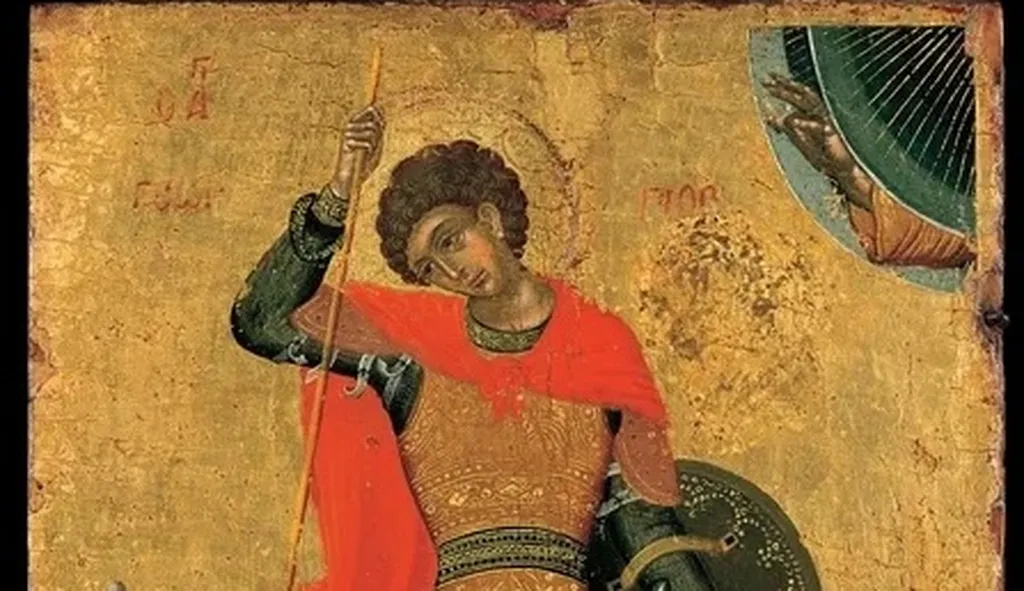


Today, St George's Day, there is a quality of a time not just quantity.
Re-story-ation - what we need now is to tell some old stories in new ways to restory our world.
George — georgos in Greek. Geo, earth. Ergon, work. George literally means earth-worker. England’s (and many other countries’) patron saint is, in his very name, a farmer.
Across England and Europe, 23rd April traditionally marked:
- The start of the farming and planting season
- The return of the cuckoo (“on St. George’s Day the cuckoo should be heard”)
- The moment the earth was considered fully awake after winter
Our calendar got 11 days out of whack due to Julian to Gregorian calendar shift in 1752 - so 23rd April is actually equivalent to 4th May. And Beltane/May Day was 5th to 7th May from an astronomical perspective. So St. George’s Day used to be May Day.
This explains a lot of things that otherwise seem puzzling such as why so many May Day folk customs - morris dancing, the Jack-in-the-Green, the greenery figures, the mummers plays - also appear in St George’s Day traditions.
The Maypole
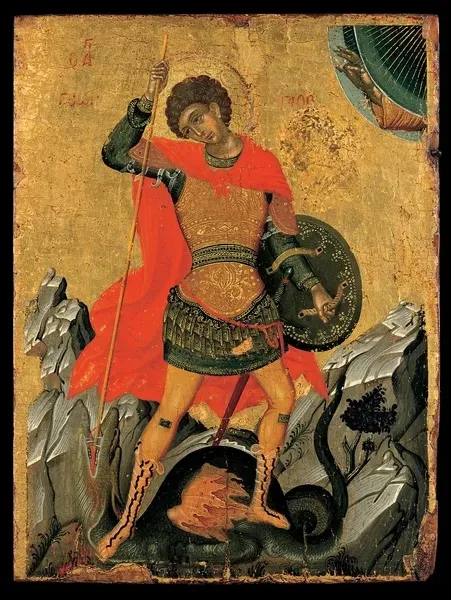
Maypole is representative of sunlight ray penetrating the earth and fertilizing the soil, after a long winter. St George’s lance is perhaps a light ray too as the only straight lines in nature are light rays…
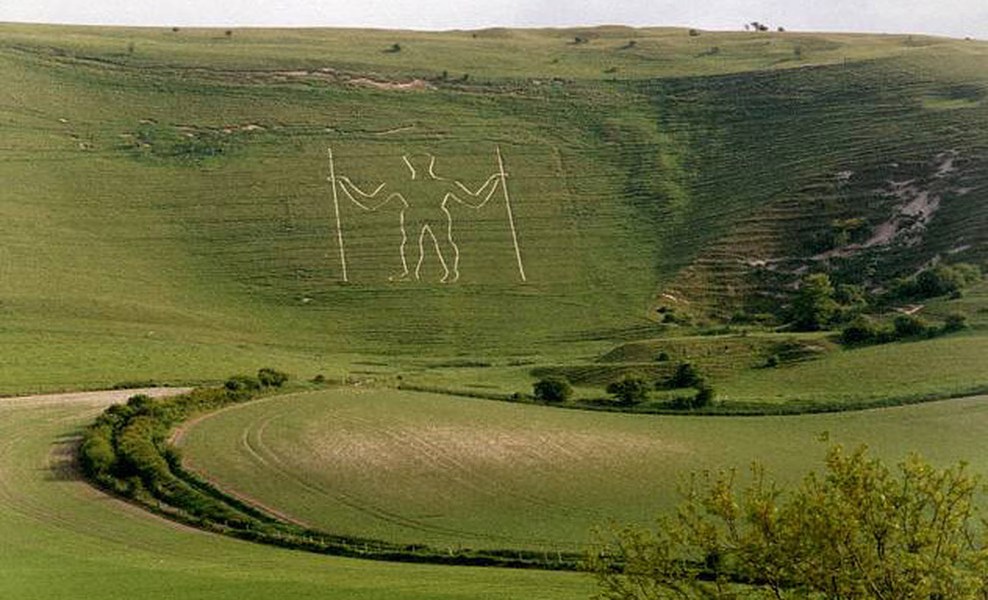
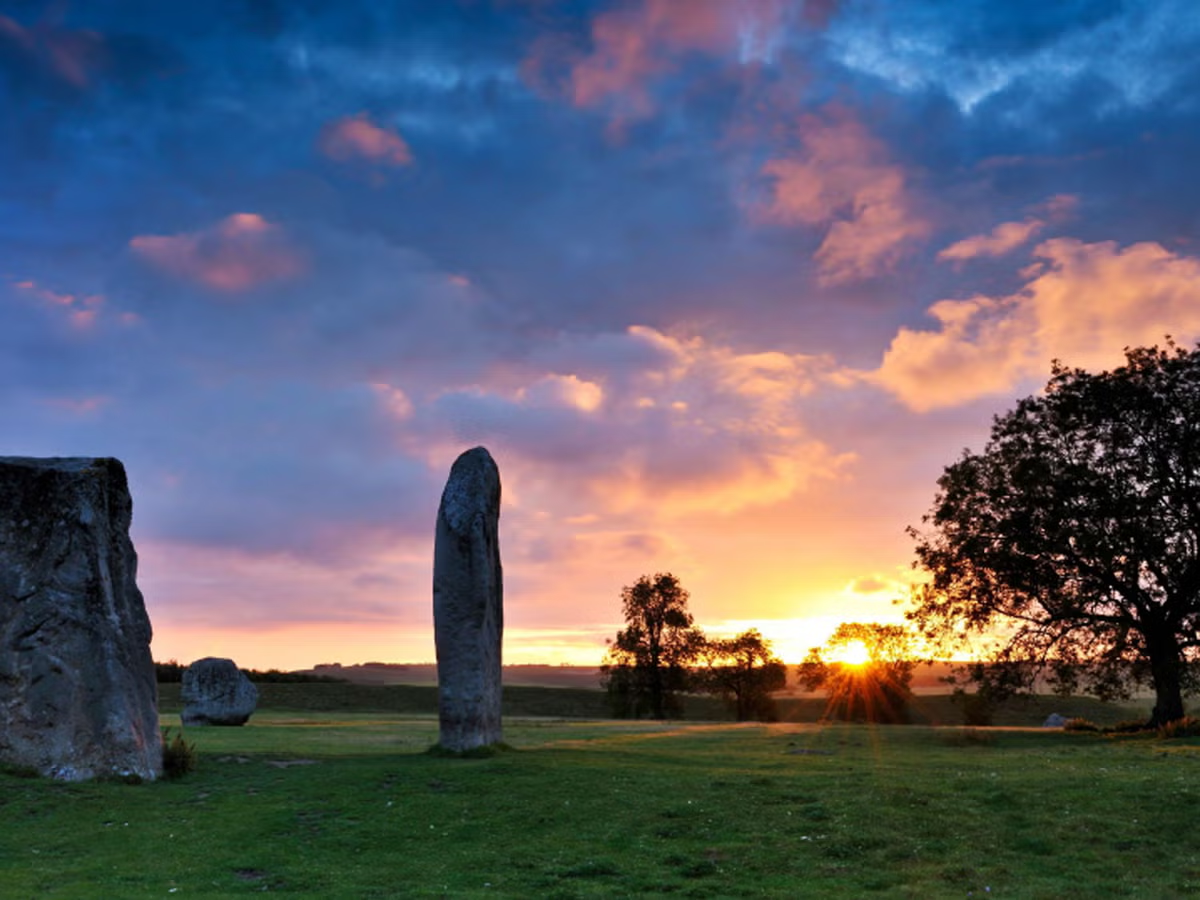
With George his lance is piercing the dragon, which is representative of nature’s untameable wild way, and so they are coming into relationship. Dragons have been associated with the earth and water ways throughout history and across cultures, and also the 'genius loci', or spirit of place. Uffington is where St George supposedly fought with the dragon. Avebury was a serpentine temple with snaky pathways. And chalk carvings on hills, such as the Long Man of Wilmington have lances/staffs too. The dragon is everywhere.
Also, this detail gets dropped from the story: George doesn’t just charge in and kill it. He leads the dragon back to the city on a leash first. The dragon is not just a symbol of the wild forces of the earth. It is also a mirror for the fears, habits, and ways of living that slowly become normal – the things we begin to organise our entire world around without quite noticing. George's courage is therefore not only the courage to fight. It is the courage to refuse to keep building your world around the thing that diminishes it. So much of our relationship with the land has been shaped by exactly that slow accommodation: to fear of scarcity, fear of wildness, fear of losing control. Notice what has become your dragon, and ask whether it is time to walk it somewhere else on a leash.
In Eastern Europe, which kept the Julian calendar much longer, St George’s Day was the great spring festival – the day cattle were driven out to summer pastures, fires were lit, the earth was blessed.
The Green Man
The Green Man figure also appears at both May Day and St George’s Day. Jack-in-the-Green, the May King, the George in the mummers play – these are all versions of the same archetype. Osiris, Pan, Dionysus, John Barleycorn, Al Khidr, Jesus as Green Pilgrim, Robin Hood (Charter of the Forest).
The Roots of St George
The Reformation and then the calendar reform together worked to systematically separate St George from his pagan/seasonal roots. The Church fixed him to a martyrdom date; the calendar reform moved that date away from the actual seasonal moment. What had been an obvious spring earth-festival became, over time, an apparently arbitrary saint’s day in mid-spring with no obvious natural logic, apart from it being his death day, and yet it had been so much more and often these important saints have official death days aligning with the sun, e.g. Cuthbert on 20th March, Spring Equinox.
Regarding his true status as a unifier rather than a divisive figure of racism, George was a great soldier for the Romans and eventually he rose so high he was offered the rulership of ten cities if he would bow to the pagan gods/emperor. He refused to kneel and then was tortured in many ways for a week until he died. George was offered cities – actual land, actual rulership – and he said no. The founding myth of English national identity is rooted not in conquest or possession, but in refusal. In holding a line. In saying: there are things more important than what you are offering me.
Ironically, when Constantine christianised the Roman Empire a few decades later, St George was the first saint to be consciously used to bring the Empire together, probably because of his background and the fact he was Eastern, or from Turkey. So he was a rebel even though used by an empire. And a symbol of anti-racism because he was a unifying figure across many countries. Therefore, perhaps we should think of patron saints rather than being about national superiority, and instead relationship with your land for the sake of belonging.
.svg)

Further reading



.svg)
Comments
0 Comments
Login or register to join the conversation.
Tom Jones
Lorem ipsum dolor sit amet, consectetur adipiscing elit. Suspendisse varius enim in eros elementum tristique. Duis cursus, mi quis viverra ornare, eros dolor interdum nulla, ut commodo diam libero vitae erat. Aenean faucibus nibh et justo cursus id rutrum lorem imperdiet. Nunc ut sem vitae risus tristique posuere.
Tom Jones
Lorem ipsum dolor sit amet, consectetur adipiscing elit. Suspendisse varius enim in eros elementum tristique. Duis cursus, mi quis viverra ornare, eros dolor interdum nulla, ut commodo diam libero vitae erat. Aenean faucibus nibh et justo cursus id rutrum lorem imperdiet. Nunc ut sem vitae risus tristique posuere.