.svg)

Beyond the Ordinary: pilgrimage as a threshold into the unseen
02
Oct
,
2025


Beyond the Ordinary: pilgrimage as a threshold into the unseen
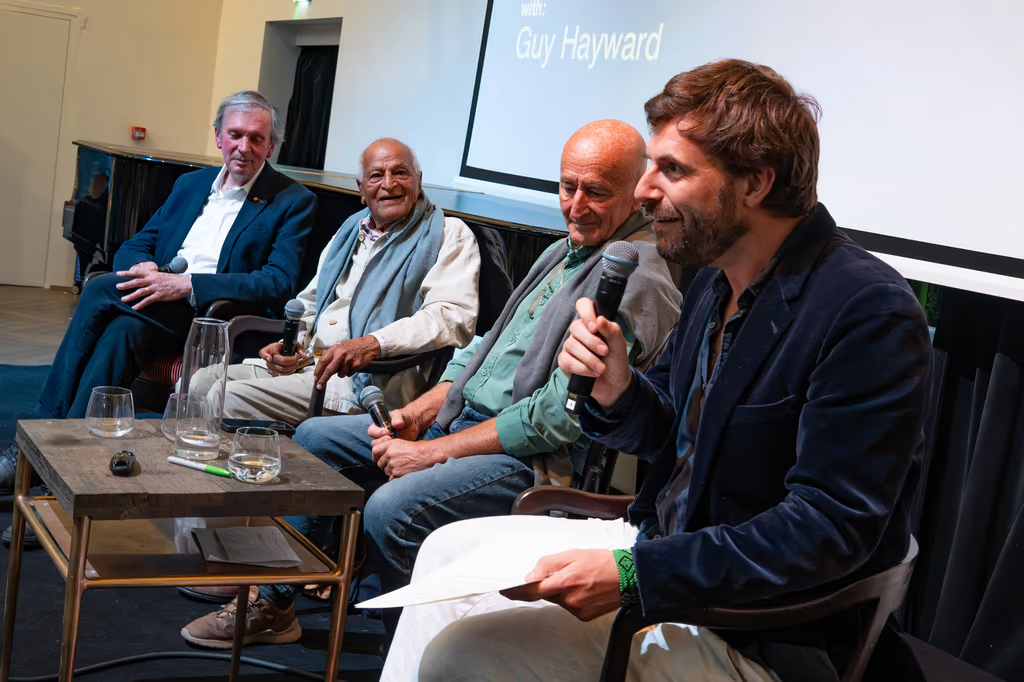
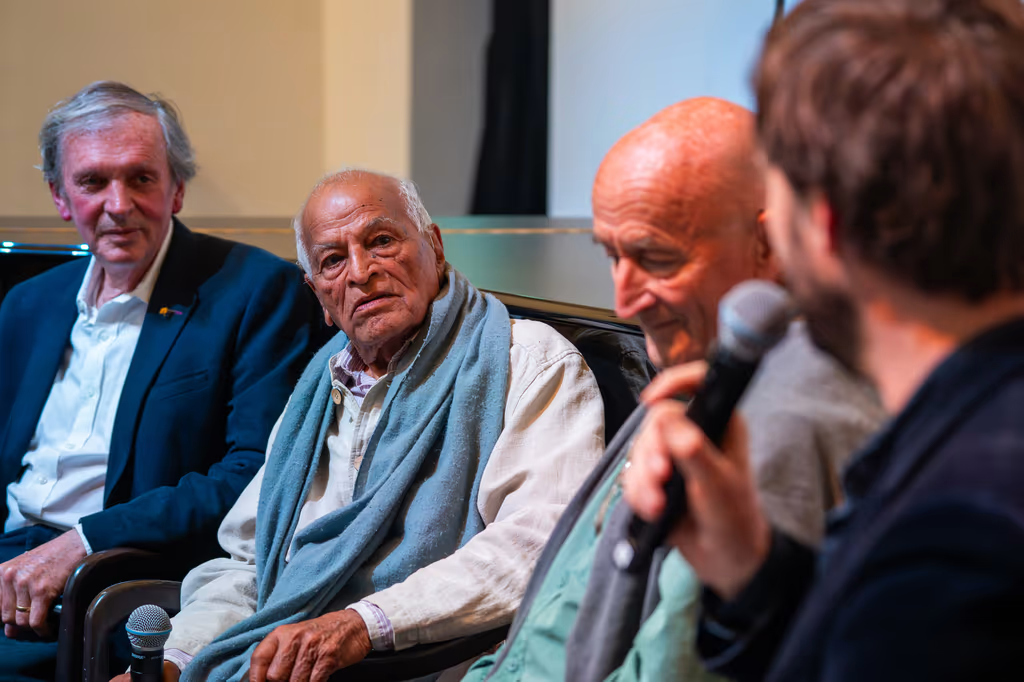
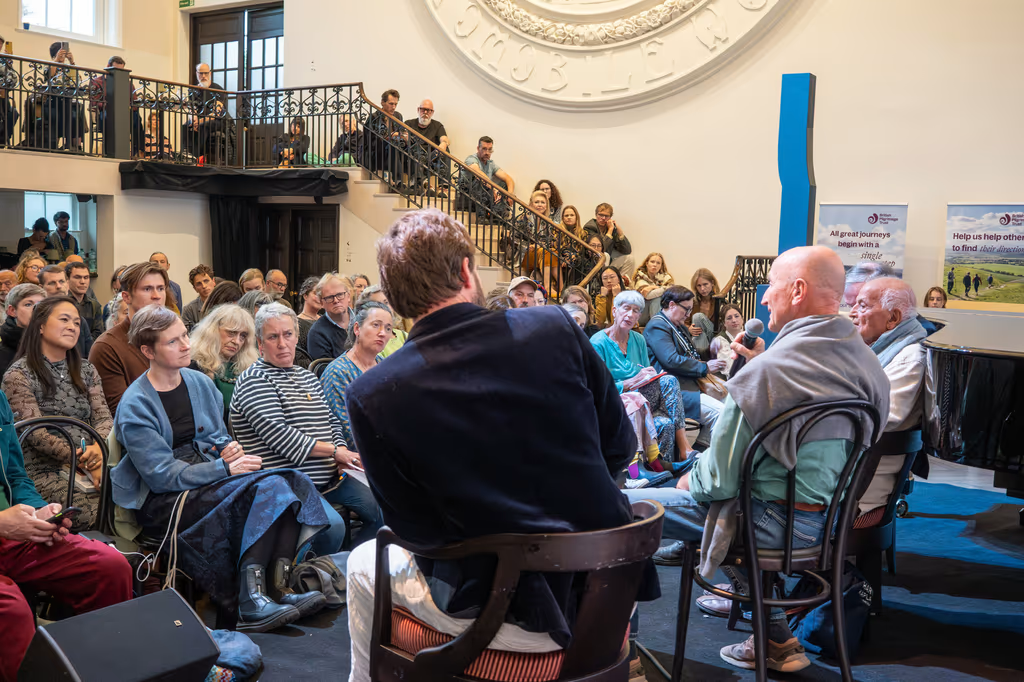
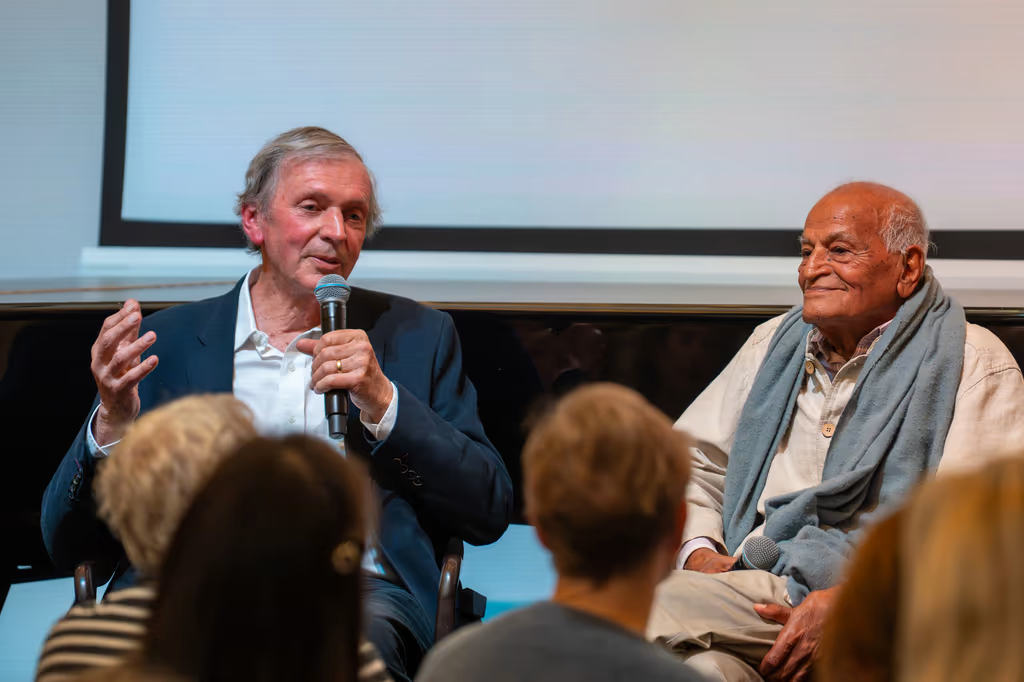
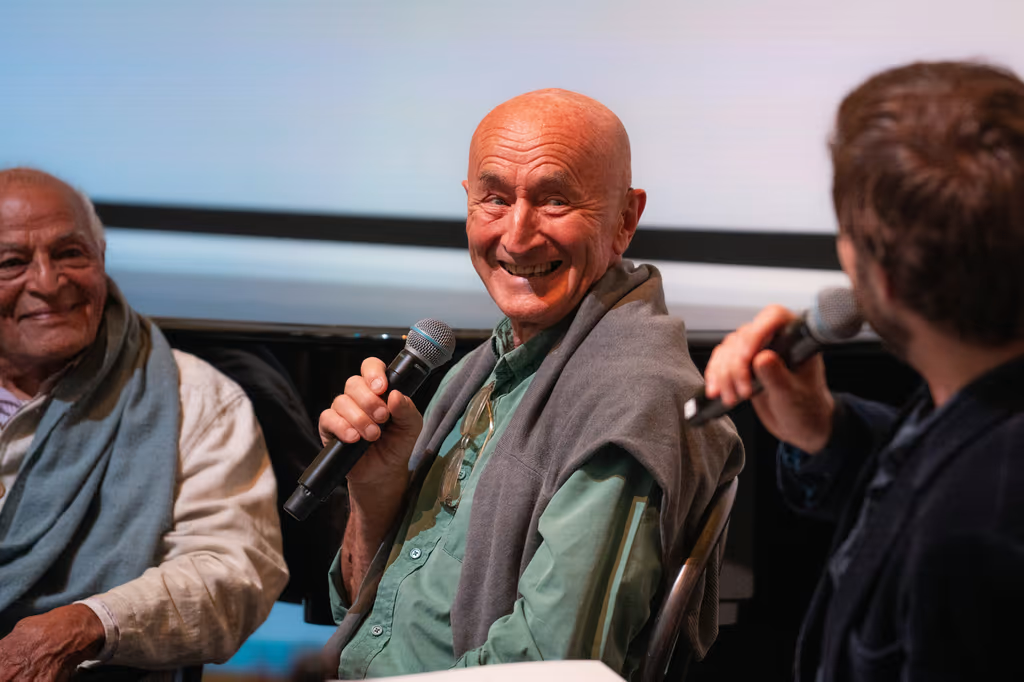
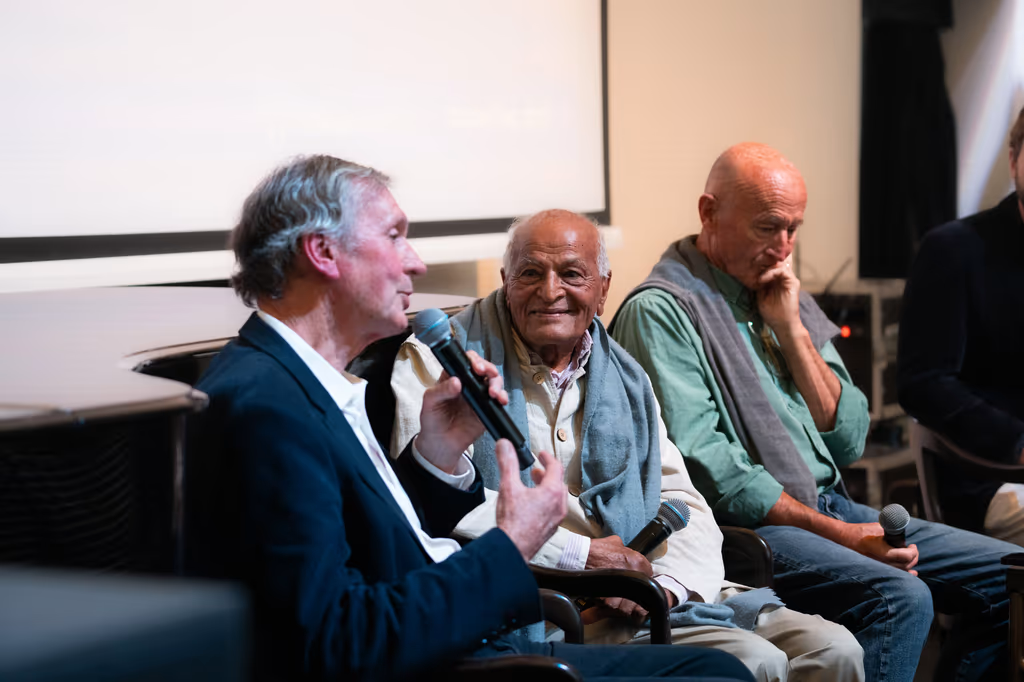
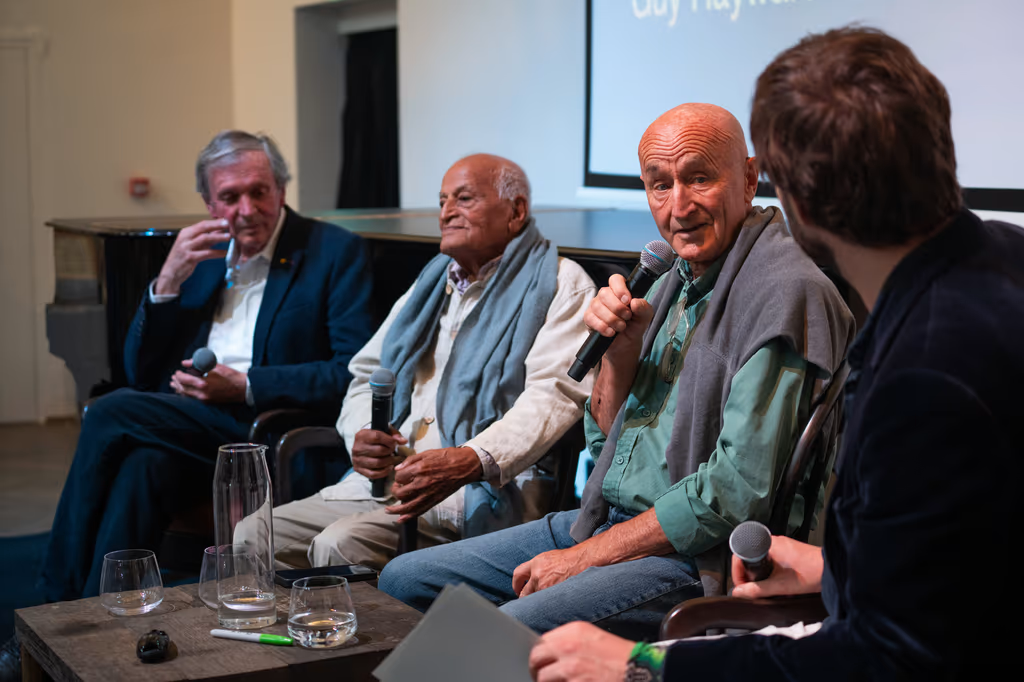
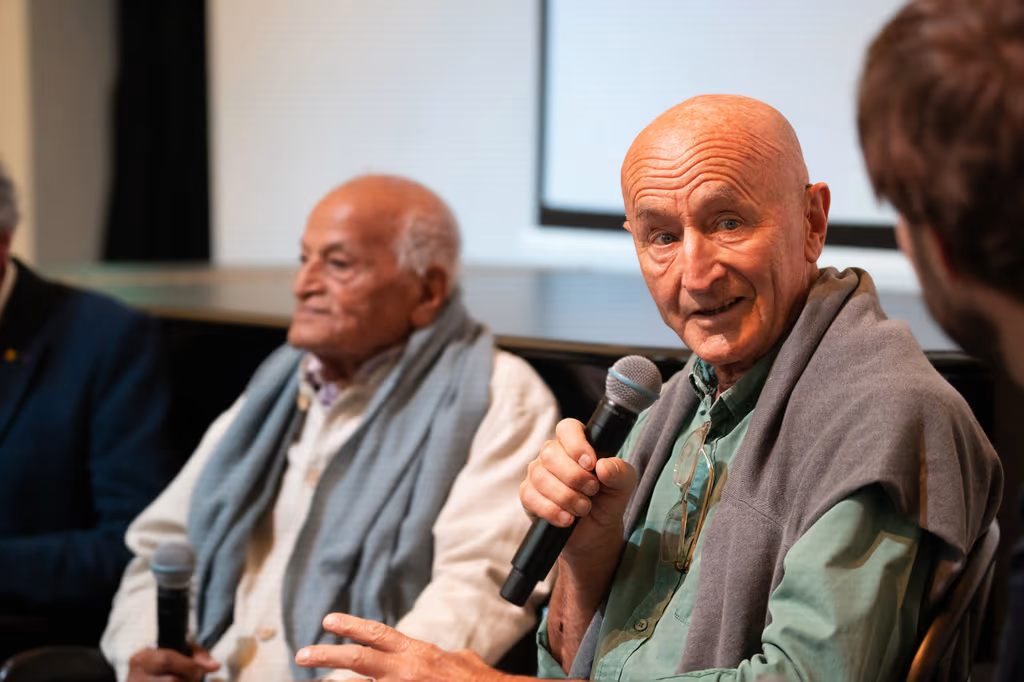
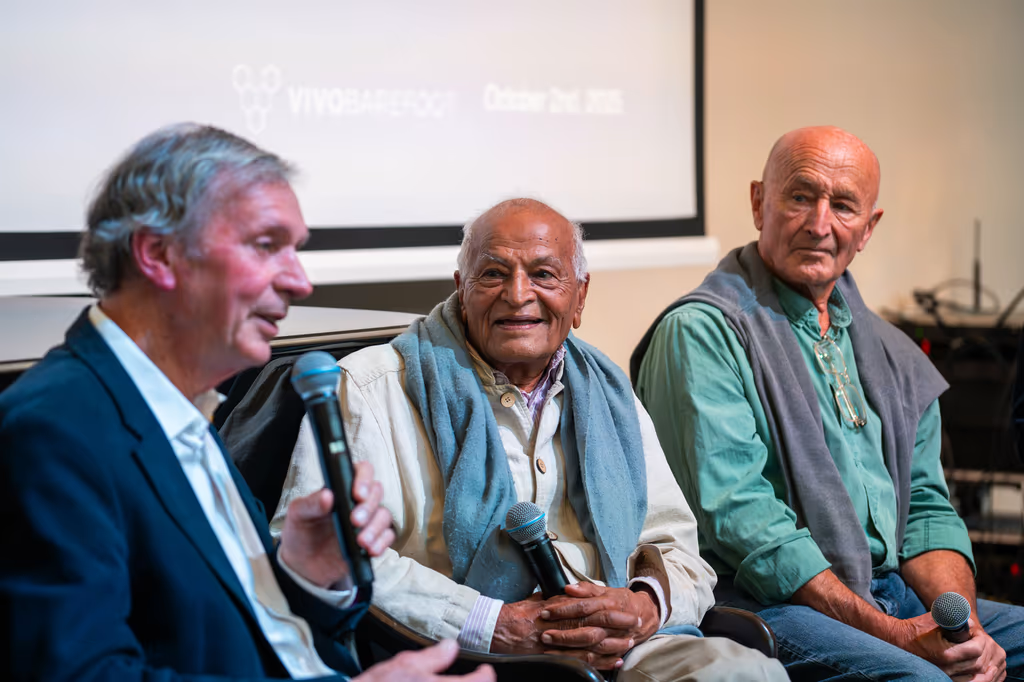
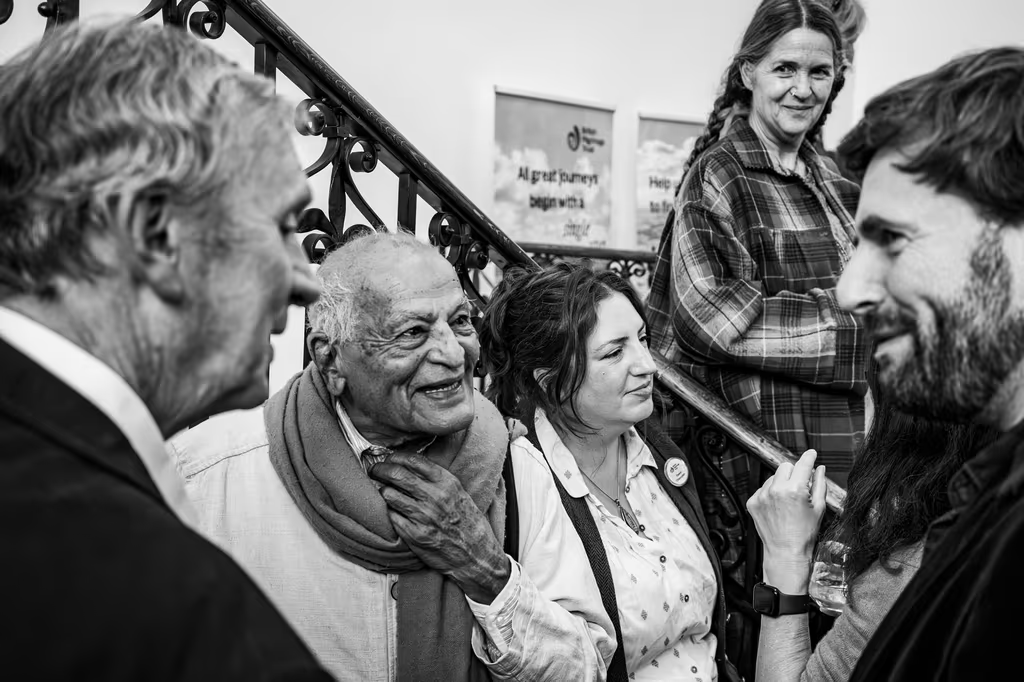
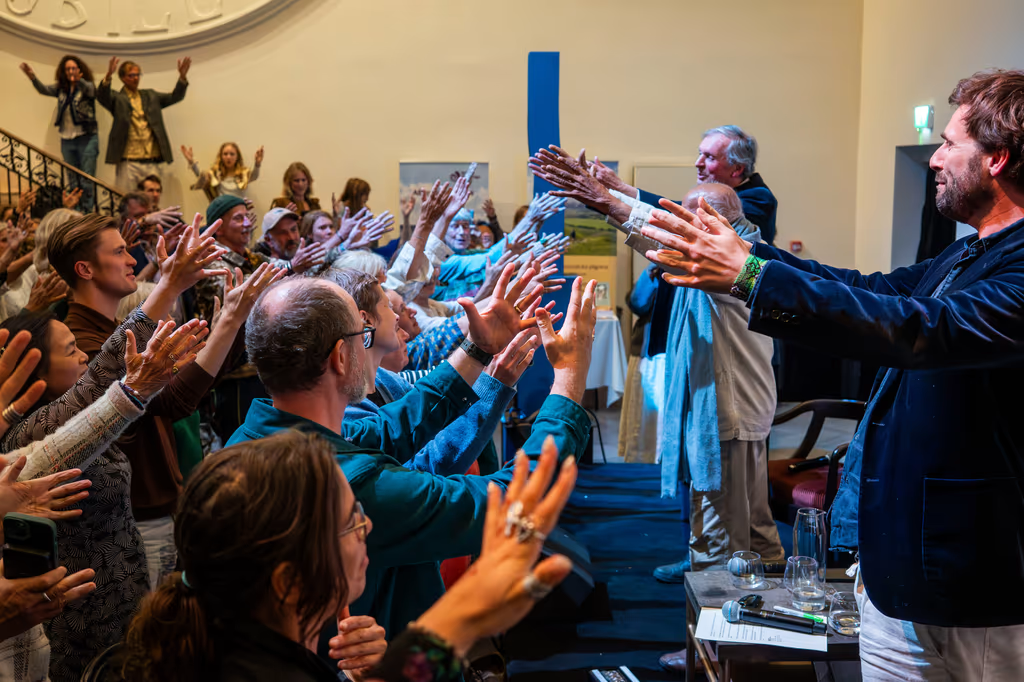
At the close of the Pilgrimage Gathering 2025, the final panel brought together three strong voices — Rupert Sheldrake, Mac Macartney, and Satish Kumar — in conversation with Guy Hayward. Entitled “Beyond the Ordinary,” the panel explored how pilgrimage offers a gateway to consciousness, belonging, and spiritual practice.
Guy opened by asking the panel about their experiences of pilgrimage as a spiritual practice, and how each of them has taken their experiences to go beyond the “ordinary.” He acknowledged a shift from earthbound topics earlier in the day such as folk traditions and herbalism to this panel’s focus on spirit, mystery, and what lies beyond.
This page summarises what the panellist covered, but there is so much more to hear. So we encourage you to watch the full video below!
Pilgrimage as a Spiritual Threshold
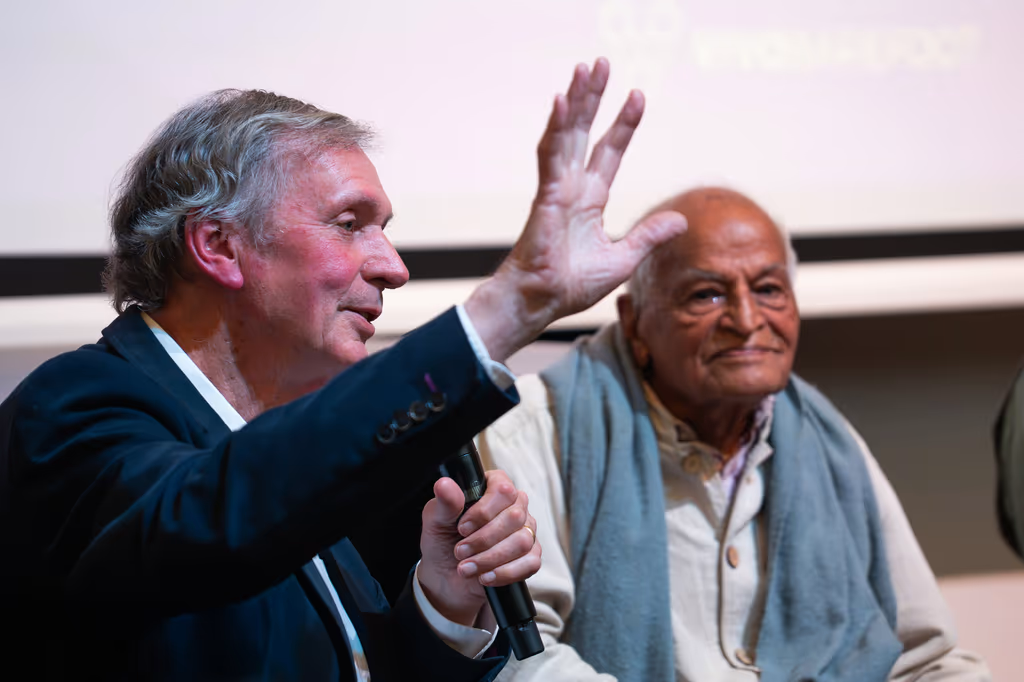
Rupert Sheldrake began by sharing that his interest in pilgrimage was kindled during seven years living in India. He was surrounded by pilgrims — not just devotees, but PhD-level scientists who regularly shaved their heads, took temple offerings, and immersed themselves in sacred rituals. A formative experience came when Rupert climbed a holy hill to a Shiva temple, barefoot, chanting and sweating, the path alive with monkeys and ritual sounds. “It just felt so powerful,” he recalled. The encounter with the sacred left an imprint on him, awakening a sense of connection to place. When he returned to England, he found holy places here too — cathedrals, ancient paths, sacred wells — and rediscovered the spiritual essence of his homeland. He described taking his godson on a birthday pilgrimage to Canterbury, walking through meadows and orchards to a holy well, sharing a cream tea, and lighting candles at the shrine of St. Thomas. That intention and ritual formed a rite of passage.
Rediscovering the Sacred in Everyday Life
Mac Macartney, founder of Embercombe and a lifelong walker of Britain’s ancient paths, offered a striking perspective: “I never wish to leave the ordinary,” he said. For him, the “extraordinary” is already present — in trees, stones, foxes, tears, and the breath itself. Every step is part of a larger ceremony. He spoke of a winter pilgrimage from his birthplace to the Isle of Mona, navigating by the sun, eating foraged acorns, walking without tent or compass through frost-bitten hills, all to honour the indigenous roots of the British Isles. “I felt more naked and more true with every step,” he said. Though his walks are shorter now, he urged that “life itself is a pilgrimage” and encouraged listeners to seek sacredness even in city streets.
Radical Love and Everyday Pilgrimage
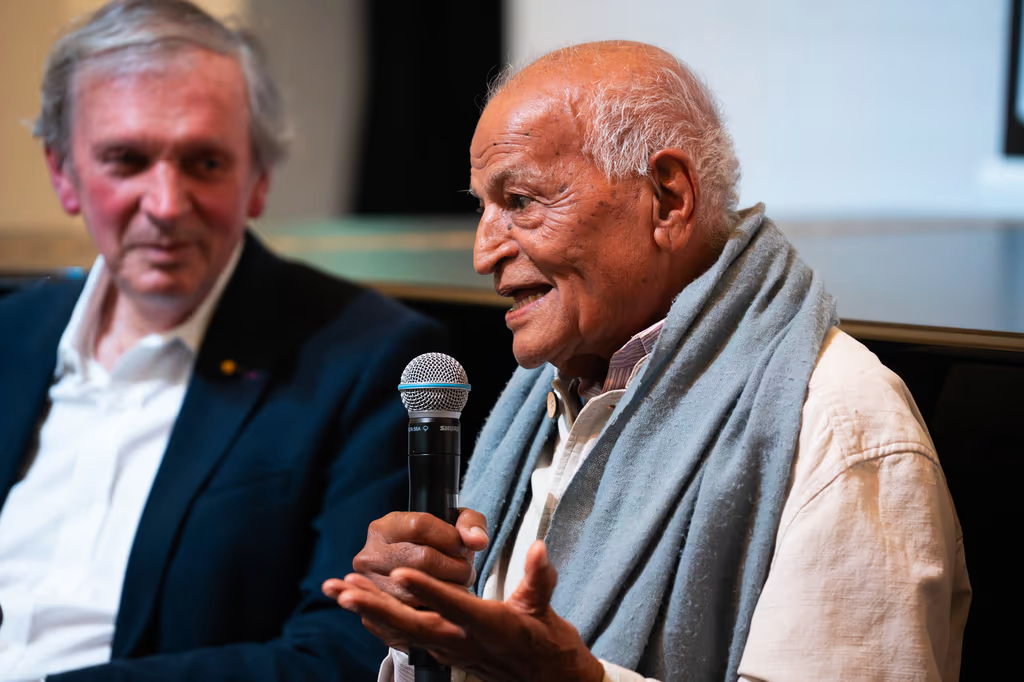
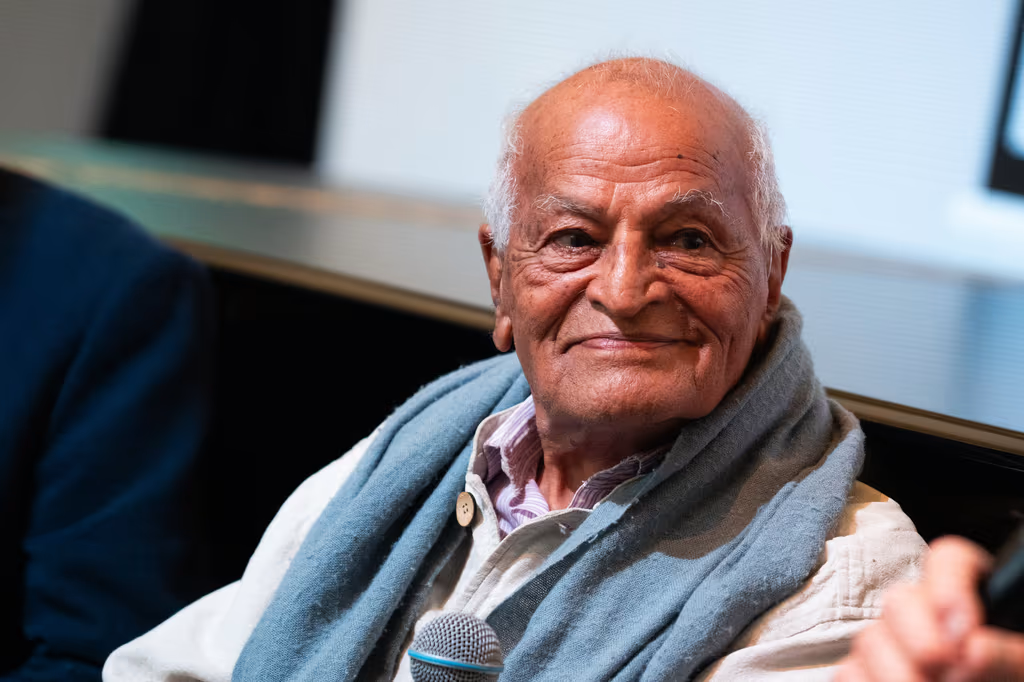
Satish Kumar recounted his legendary 8,000-mile peace walk from India to Washington, D.C., made without money. His message was simple: love all people, regardless of ideology. “I said to the Soviets, ‘I love you.’ To the capitalists, ‘I love you.’ To the Buddhists, Christians, Muslims — ‘I love you.’” He argued that the difference between a tourist and a pilgrim is the heart. “A pilgrim does not expect. A pilgrim accepts. A pilgrim praises life.”
He reminded the audience that we are all born with the gift of legs — and that walking is the most democratic, accessible form of spiritual practice. He described pilgrimages to sacred sites around the world — Mount Kailash, Assisi, Lindisfarne — but emphasised that the sacred is everywhere. “Every place is sacred. Every human being is a pilgrim.”
Pilgrimage and Religion: Tension, Practice, and Belief
This theme led naturally into a more complex discussion: how do religious associations impact people’s willingness to engage in pilgrimage today?
Guy Hayward shared findings from a recent YouGov survey by the British Pilgrimage Trust, revealing that among all the practical and logistical barriers to pilgrimage, the strongest deterrent for many was religion itself. People were put off by the assumption that pilgrimage is inherently religious.
As someone who passionately supports the Church of England and often promotes church spaces, Guy admitted to a deep internal conflict. “I love Christianity. I love the Church,” he said, “but I also get angry at its lack of innovation.” He acknowledged widespread perceptions around issues like gender and sexuality, and the Church’s struggle to adapt. He reflected on the contradiction of spending so much time encouraging people to step into churches — only to wonder if those institutions are truly listening.
Rupert Sheldrake responded with his own perspective, distinguishing between religious institutions and spiritual experience. He acknowledged that most people in Britain today are not religious, and that religion is often misunderstood or seen through a lens of outdated dogma. Yet, from his own pilgrimage experience — entering sacred spaces across traditions — he has always felt welcomed and uplifted. “Religion has become a scapegoat,” he suggested, “not because of present-day exclusion, but because of a deeper cultural indoctrination by Enlightenment rationalism.”
Mac Macartney added that he, too, had been disillusioned by religious figures early in life — schoolmasters, gurus, institutions — but had found belonging among Indigenous people, who taught him that belief itself is unnecessary. “In Lakota, there is no word for belief,” he said. “It’s not about what you believe. It’s about how you live.”
For Satish Kumar, religion without love is meaningless. He echoed Jesus’s words — “love your neighbour” — and extended them universally. “Christ didn’t say love only your Christian neighbours. He said love your neighbour — whoever they are.”
The panelists ultimately agreed that pilgrimage offers a way beyond belief systems — a return to embodied, heart-led, inclusive spirituality. As Mac beautifully put it, “My dog doesn’t think about religion. He just embodies love.”
To live is to risk
An audience member asked about risk: the risk embodied in loving fully, entering into wholeness and the risk of walking the path of non dogma. She pointed out that in Arabic “risk” means “sustenance” and she asked the panel to speak to this idea.
In response, Satish reminded the audience: “To live is to risk.” His message was simple — trust life, embrace challenge, practice radical love. Rupert connected the appetite for risk with our culture’s yearning to be fully present — citing extreme sports as a way modern people try to reconnect with danger, awe, and presence.
Mac concluded by describing his own nightly practices of coming into his heart: watching his sleeping child, bringing lemon water to his wife, touching the dog, noticing the cat — small, embodied rituals that open the heart. “I want to learn how to love profoundly,” he said.
To close, Satish led the audience in a call-and-response chant:
I walk in beauty before me. I walk in beauty behind me.
I walk in beauty above me. I walk in beauty below me.
The whole world is beautiful.
A fitting end to a day that invited each person to find their own sacred path — whether in cathedrals or supermarkets, forests or families — and to walk with attention, presence, and heart.
I walk in beauty before me. I walk in beauty behind me.
I walk in beauty above me. I walk in beauty below me.
The whole world is beautiful. Satish Kumar
.svg)

Further reading

.svg)
Comments
0 Comments
Login or register to join the conversation.
Tom Jones
Lorem ipsum dolor sit amet, consectetur adipiscing elit. Suspendisse varius enim in eros elementum tristique. Duis cursus, mi quis viverra ornare, eros dolor interdum nulla, ut commodo diam libero vitae erat. Aenean faucibus nibh et justo cursus id rutrum lorem imperdiet. Nunc ut sem vitae risus tristique posuere.
Tom Jones
Lorem ipsum dolor sit amet, consectetur adipiscing elit. Suspendisse varius enim in eros elementum tristique. Duis cursus, mi quis viverra ornare, eros dolor interdum nulla, ut commodo diam libero vitae erat. Aenean faucibus nibh et justo cursus id rutrum lorem imperdiet. Nunc ut sem vitae risus tristique posuere.